Bearing Maintenance and Longevity Guide
Bearings are essential components in nearly every piece of machinery, from small household appliances to large industrial equipment. When they fail, the results can range from minor inconveniences to expensive downtime and repairs. Most bearing failures are preventable through proper maintenance practices, including correct lubrication, regular inspections, and appropriate handling techniques.

You might hear a strange grinding noise or feel unusual vibrations in your equipment. These are often the first signs that something is wrong with your bearings. Understanding how to maintain your bearings properly can save you significant time and money whilst keeping your machinery running smoothly. This guide provides practical steps and proven strategies to help you extend bearing life and avoid common problems.
Whether you work in manufacturing, maintenance, or simply want to keep your equipment in good working order, knowing the basics of bearing care is valuable. From selecting the right lubricants to avoiding installation errors, each aspect of maintenance plays a role in how long your bearings will last. The following sections will walk you through everything you need to know about maintaining bearings for maximum longevity.
Key Takeaways
- Regular bearing maintenance prevents unexpected failures and extends the lifespan of your machinery
- Proper lubrication and keeping bearings clean from contaminants are essential for optimal performance
- Correct installation, alignment, and monitoring help you identify and solve problems before they cause damage
Understanding Bearing Longevity and Failure

Bearing life depends on multiple interacting factors, from load conditions to environmental exposure. Most bearings fail well before reaching their theoretical service life, with studies showing fewer than 30% achieve their calculated fatigue life expectancy.
Key Factors Affecting Bearing Service Life
The load your bearing carries directly impacts how long it will last. Higher loads create more stress on rolling elements and raceways, accelerating material fatigue. Operating speed also plays a crucial role—faster rotation generates more heat and requires different lubrication strategies than slower applications.
Temperature conditions affect both the bearing material and its lubricant. Excessive heat breaks down lubricants and can alter the metallurgical properties of bearing components. Cold environments make lubricants less effective at reducing friction.
Your bearing’s environment matters significantly. Exposure to moisture, dust, or chemical contaminants shortens service life by causing corrosion and abrasive wear. Even microscopic particles can initiate surface damage that leads to early failure.
Proper installation and alignment are non-negotiable. Misaligned bearings experience uneven load distribution across their surfaces. This creates localised stress points that dramatically reduce bearing longevity.
Recognising Causes of Premature Bearing Failure
Inadequate lubrication remains the leading cause of premature bearing failure. Too little lubricant allows metal-to-metal contact, generating excessive heat and wear. Over-lubrication creates its own problems, causing churning that raises temperatures and damages seals.
Contamination from dirt, water, or process materials causes abrasive wear on bearing surfaces. Even small amounts of contamination accelerate fatigue and create pitting or spalling on raceways.
Incorrect installation damages bearings before they enter service. Using excessive force, striking bearings directly, or failing to heat components properly during fitting creates surface cracks and deformation. Poor handling during storage or transport also compromises bearing integrity.
Overloading occurs when your application exceeds the bearing’s rated capacity. This happens through poor bearing selection or unexpected operational changes that increase loads beyond design specifications.
Common Types of Bearing Damage
| Damage Type | Characteristics | Primary Cause |
|---|---|---|
| Spalling | Flaking or pitting of bearing surfaces | Fatigue, contamination, overloading |
| Smearing | Displaced metal on raceways | Inadequate lubrication, excessive speed |
| Corrosion | Rust or chemical damage | Moisture exposure, improper storage |
| Cracking | Fractures in rings or rolling elements | Installation damage, excessive force |
| Brinelling | Indentations in raceways | Impact loads, vibration during standstill |
Fatigue damage appears as subsurface cracks that eventually reach the bearing surface, creating spalls or chips. This represents normal wear but occurs prematurely when operating conditions exceed design parameters.
False brinelling develops when vibration causes fretting between stationary contact points. The resulting wear pattern resembles impact damage but stems from inadequate lubrication during vibration.
Fundamentals of Bearing Maintenance

Effective bearing maintenance relies on three core practices that directly impact equipment reliability and service life. Regular preventative programmes catch problems early, proper inspection techniques reveal hidden issues, and correct cleaning procedures protect bearing surfaces from damage.
Importance of Preventative Maintenance Programmes
A preventative maintenance programme keeps your bearings running smoothly and prevents costly failures. Most bearing failures stem from preventable conditions rather than natural wear, which means scheduled maintenance can stop problems before they start.
Your maintenance programme should include regular lubrication schedules based on manufacturer specifications. Check lubricant levels at consistent intervals and replace degraded lubricant before it loses effectiveness. This simple step reduces friction between rolling elements and extends bearing life significantly.
Document each maintenance activity in a logbook. Record dates, lubricant types used, and any unusual observations. This creates a maintenance history that helps identify patterns and predict when bearings might need replacement.
Key programme elements include:
- Scheduled lubrication intervals
- Regular inspection routines
- Component replacement schedules
- Detailed record keeping
- Staff training on proper procedures
Inspection and Condition Monitoring Techniques
Condition monitoring detects early warning signs of bearing failure. Check bearing housings regularly for wear, corrosion, or misalignment, as these issues directly affect bearing performance and lifespan.
Listen for unusual noises during operation. Grinding, squealing, or clicking sounds indicate problems that need immediate attention. Use vibration analysis tools to detect changes in bearing condition that aren’t obvious to the naked eye.
Monitor operating temperatures with infrared thermography or temperature sensors. Excessive heat suggests inadequate lubrication or bearing damage. Check for contamination by inspecting seals and shields for damage that could allow dirt or moisture entry.
Routine Cleaning and Handling Best Practices
Clean bearings prevent contamination from causing premature failure. Dirt, dust, and debris increase friction between bearing surfaces and accelerate wear. Work in a clean environment when handling bearings to minimise contamination risk.
Never touch bearing surfaces with bare hands, as skin oils attract contaminants. Use lint-free cloths and approved cleaning solvents to remove old lubricant and debris. Allow bearings to dry completely before applying fresh lubricant.
Store unused bearings in their original packaging in a dry, temperature-controlled location. Handle bearings carefully during installation, using proper tools and techniques specified by the manufacturer. Dropping or striking bearings can create surface damage that leads to failure.
Lubrication for Optimal Bearing Performance

Proper lubrication separates moving parts, reduces friction, and prevents premature bearing failure. The right lubricant selection, correct application conditions, and appropriate maintenance intervals work together to extend bearing life and maintain reliable equipment operation.
Selecting the Right Lubricants for Bearings
Your choice between oil and bearing grease depends on your specific operating conditions. Grease serves 80 to 90 percent of bearing applications because it stays in place, doesn’t require continuous monitoring, and simplifies your maintenance routine. Oil works better for high-speed applications and situations requiring heat dissipation.
When selecting bearing grease, focus on these key properties:
- Base oil viscosity at your bearing’s operating temperature
- Temperature range the grease can handle
- Soap base type (lithium for high speeds, calcium for food processing, bentone clay for heavy loads)
- EP additives for extreme pressure situations
Lithium-based greases suit most general applications with higher temperature and speed requirements. Sodium greases cost less and work well for medium-high temperature uses. Synthetic options handle very high temperatures but come at a premium price.
The viscosity of your lubricant determines the thickness of the protective film between bearing surfaces. Select a lubricant with the lowest acceptable viscosity at your bearing’s operating temperature. Remember that mineral oils and synthetic oils have different properties and cannot be mixed or substituted for each other.
Establishing Proper Lubrication Conditions
Clean your bearings thoroughly before applying fresh lubricant. Remove existing oils, anti-corrosion coatings, and old grease using residue-free solvents. This prevents incompatibility issues between different lubricant types and ensures optimal film formation.
Fill volume matters significantly. Grease-lubricated bearings typically require filling to a percentage of the bearing’s free internal space—not complete filling. Over-lubrication increases internal friction and generates excessive heat. Under-lubrication leaves contact surfaces inadequately protected, causing accelerated wear.
Your operating temperature directly affects lubricant performance. Oil viscosity decreases as temperature rises, so verify your lubricant maintains adequate viscosity at your bearing’s actual running temperature. High-temperature applications require specially formulated greases or oils that resist breakdown and maintain their protective properties.
Conduct a proper break-in procedure for applications with high speeds or specific preload requirements. This drains excess grease, orientates the lubricating film correctly, creates a grease ring for continuous oil delivery, and establishes stable operating temperatures.
Lubrication Frequency and Methods
Base your lubrication schedule on bearing condition rather than fixed calendar intervals. Monitor friction levels to determine when bearings actually need fresh lubricant. Weekly or daily regreasing often adds unnecessary lubricant when the existing grease still performs adequately.
Common lubrication methods include:
| Method | Best For |
|---|---|
| Drip lubrication | Low loads, low to medium speeds |
| Splash lubrication | Higher speeds and temperatures in horizontal applications |
| Forced feed systems | Heavy loads, high speeds requiring cooling |
| Grease application | Parts requiring lubricant retention, limited access situations |
Apply grease gradually using ultrasound monitoring when available. Add small amounts and listen for friction level changes. Stop when the decibel level reaches its minimum and stabilises. A slight increase in noise indicates you’ve reached the optimal fill point.
Always use compatible lubricants throughout a bearing’s service life. Mixing incompatible greases causes chemical breakdown and premature failure. If you must switch lubricant types, clean bearings completely before introducing the new product.
Avoiding Lubrication and Maintenance Mistakes

Most bearing failures stem from preventable errors in lubrication and maintenance practices. Understanding the three primary lubrication mistakes—over-lubrication, under-lubrication, and wrong lubricant selection—helps you protect your equipment from premature failure and costly downtime.
Common Lubrication Mistakes to Avoid
Over-lubrication ranks as the leading cause of premature bearing failure. When you add too much grease or oil, you increase friction and heat within the bearing. This excess lubricant creates pressure that damages seals and generates excessive bearing temperature. You’ll notice grease leakage, unusual noise, and elevated operating temperatures.
Under-lubrication causes equally serious problems. Without sufficient lubricant, metal surfaces contact directly, leading to rapid wear and overheating. Your bearings will show high operating temperatures, unusual vibrations, and accelerated deterioration.
Using the wrong lubricant type or mixing incompatible products creates the third major error. Different greases contain varying thickeners and base oils that may not suit your application’s speed, load, or temperature requirements. You’ll encounter excessive wear, equipment breakdown, and blocked lubrication paths when you select inappropriate products.
Key indicators of lubrication mistakes:
- Excessive heat during operation
- Grease discolouration or blackening
- Unusual vibration patterns
- Premature seal failure
- Visible grease leakage
Impact of Incorrect Lubricant Application
Your application method significantly affects bearing performance. Adding lubricant from incorrect positions prevents proper distribution throughout the bearing assembly. When bearings operate in oscillating or limited-rotation applications, improper grease placement leads to dissipation issues and incomplete coverage.
Timing matters as well. Applying lubricant during partial operation or incorrect machine states reduces effectiveness. You must follow manufacturer specifications for grease quantity based on bearing size, speed, and load conditions. Leading bearing manufacturers provide calculation tools and charts to determine precise volumes.
Temperature considerations affect application success. High-temperature environments require lubricants with appropriate thermal stability. Standard greases break down when exposed to excessive heat, losing their protective properties. You need to match lubricant specifications to your actual operating conditions, not estimated ones.
Monitor relubrication intervals using ultrasound analysis, vibration monitoring, or infrared thermography. These methods reveal when bearings need fresh lubricant before bearing failure occurs.
Consequences of Inadequate Maintenance
Neglecting regular inspections accelerates bearing deterioration. You miss early warning signs like unusual noise, temperature changes, or vibration patterns that indicate developing problems. Small issues escalate into catastrophic failures when left unaddressed.
Inadequate cleaning allows contaminants to enter bearing assemblies. Dirt, moisture, and debris act as abrasives, damaging bearing surfaces and reducing operational life. Your bearings experience increased friction and accelerated wear rates.
Skipping alignment checks creates uneven load distribution. Misaligned bearings develop stress concentrations that cause premature fatigue and cracking. You’ll face unexpected downtime and replacement costs.
Poor installation practices damage bearings before they begin operating. Using incorrect tools, applying excessive force, or failing to maintain cleanliness during installation compromises bearing integrity. These errors reduce expected service life by up to 80%.
Installation, Alignment, and Operating Environment
Proper installation techniques and environmental controls determine whether a bearing will reach its expected service life or fail prematurely. The way you mount a bearing, maintain alignment under load, and manage operating temperatures directly affects bearing performance and reliability.
Best Practices for Bearing Installation
Clean all components thoroughly before installation. Any dirt, debris, or metal shavings on the shaft or housing will create stress points that damage the bearing from the start.
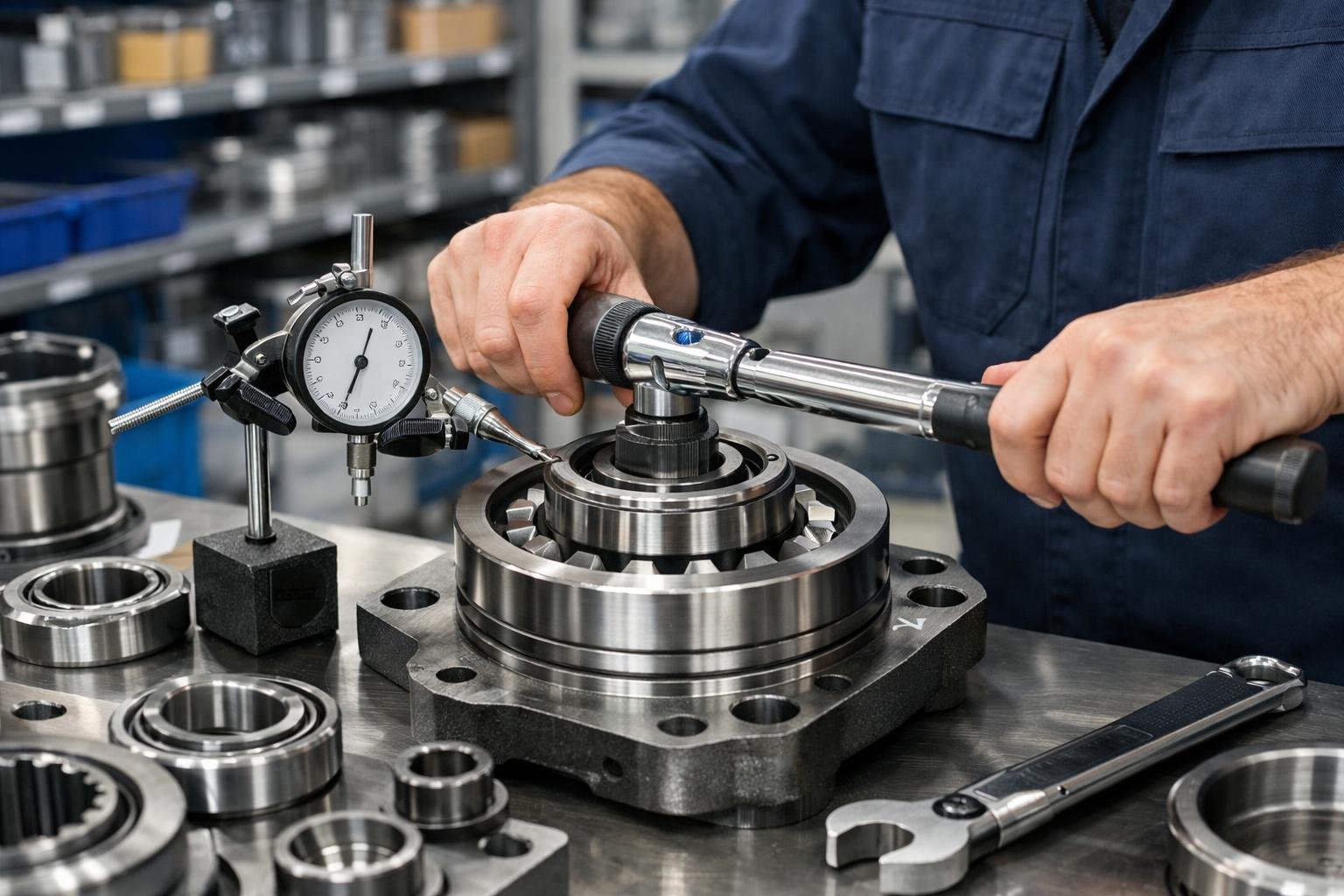
Use appropriate tools for each installation method. A bearing heater expands the inner ring through controlled thermal expansion, allowing you to slide the bearing onto the shaft without force. Press tools apply even pressure across the entire bearing face, preventing damage to the races and rolling elements.
Never strike a bearing directly with a hammer. If you must use a hammer, choose a soft-faced version and strike only through a proper mounting sleeve that contacts the correct ring. Forcing a bearing into position creates dents and scratches that become failure points.
Check the manufacturer’s specifications for proper fit tolerances. A shaft that’s too large will create excessive stress, whilst one that’s too small allows the bearing to spin on the shaft. Both conditions lead to premature failure.
Apply the correct torque when securing bearings. Use a calibrated torque wrench and follow the manufacturer’s recommended settings. Over-tightening creates internal stress and reduces the bearing’s load capacity.
Ensuring Correct Alignment and Load
Misalignment causes uneven load distribution across the bearing’s rolling elements. This uneven stress accelerates wear and generates excess heat. Use a dial indicator or laser alignment tool to verify that shafts are parallel and properly positioned within the housing.
Check for shaft runout before final installation. Runout creates vibration and uneven loading patterns that reduce bearing life. A maximum runout of 0.02 mm is acceptable for most precision applications, though your specific application may require tighter tolerances.
Verify that loads remain within the bearing’s rated capacity. Radial loads should align with the bearing’s centreline, and axial loads must not exceed the bearing’s thrust rating. Combined loads require calculations to ensure the bearing can handle both load types simultaneously.
Use shims to correct housing misalignment. Small adjustments of 0.1 to 0.5 mm can eliminate alignment issues that would otherwise cause premature wear. Recheck alignment after shimming and during initial operation to confirm proper setup.
Controlling Heat and Dissipation
Operating temperature directly influences bearing performance and lifespan. Most bearings operate optimally between 50°C and 90°C. Temperatures above 120°C accelerate lubricant breakdown and reduce bearing life by up to 50% for every 15°C increase.
Monitor temperature during initial operation and regularly thereafter. A sudden temperature rise indicates problems such as inadequate lubrication, misalignment, or excessive load. Normal bearing temperature stabilises within 30 minutes of startup.
Ensure adequate heat dissipation through proper housing design. Housings need sufficient surface area and airflow to transfer heat away from the bearing. In high-temperature applications, consider cooling fins, forced air circulation, or water cooling systems.
Ambient temperature affects bearing performance as well. Applications in hot environments require heat-resistant lubricants and may need external cooling. Cold environments require lubricants that maintain viscosity at low temperatures to ensure proper film formation during startup.
Frequently Asked Questions

Bearing maintenance raises many practical questions about failure prevention, inspection schedules, and proper handling procedures. Understanding these fundamentals helps you avoid costly breakdowns and extend equipment life.
What are the most common causes of premature bearing failure, and how can they be prevented?
Poor lubrication causes about 50% of premature bearing failures. You need to select the correct lubricant for your operating temperature, speed, and load requirements. Creating a regular lubrication schedule prevents both under-lubrication and over-lubrication problems.
Incorrect mounting accounts for 16% of early failures. You should use proper fitting tools rather than hammers or makeshift equipment. Cold mounting tools apply force evenly to bearing rings, whilst induction heaters provide controlled temperatures for heat mounting.
Contamination shortens bearing life significantly. Keep work areas clean during installation and use sealed bearings in dusty or wet environments. Store bearings in their original packaging until installation to prevent dirt and moisture ingress.
Misalignment creates excessive vibration and uneven load distribution. Use laser alignment tools or dial indicators to ensure shafts are properly aligned within manufacturer specifications.
How often should bearings be inspected and re-lubrication in typical industrial service?
Your inspection frequency depends on operating conditions and criticality of equipment. High-speed or heavy-load applications require more frequent checks than light-duty machinery.
Most industrial bearings need inspection every one to three months during normal operation. You should check bearing noise, vibration levels, temperature, and lubrication condition during each inspection.
Re-lubrication intervals vary based on speed, temperature, and bearing size. Bearings running at moderate speeds in clean conditions typically need fresh grease every 2,000 to 10,000 operating hours. High-speed or high-temperature applications require more frequent lubrication.
You can calculate specific intervals using bearing manufacturer guidelines. These take into account your bearing size, speed factor, and operating temperature.
Critical equipment benefits from continuous condition monitoring rather than scheduled inspections alone. This approach detects problems as they develop rather than at fixed intervals.
What should a bearing maintenance checklist include for routine servicing and record-keeping?
Your checklist must document bearing identification details including type, size, and location in the machine. Record the installation date and expected service life based on manufacturer ratings.
Include lubrication records showing the lubricant type, quantity applied, and date of application. Track the lubrication interval so you know when the next service is due.
Document operating conditions such as speed, load, and temperature during each inspection. Note any changes from normal operating parameters.
Record inspection findings including noise levels, vibration readings, and temperature measurements. Write down any unusual sounds, excessive heat, or other abnormalities.
Keep maintenance history including repairs, adjustments, and component replacements. This data helps identify recurring problems and predict future maintenance needs.
Store records in a maintenance management system for easy access and analysis. Digital records allow you to track trends and schedule preventive maintenance effectively.
Which inspection methods best identify early bearing wear, misalignment, or contamination?
Vibration analysis detects bearing problems before they cause failure. You can use handheld vibration metres to identify high-frequency signals that indicate wear, misalignment, or contamination. Advanced systems provide continuous monitoring and alert you to changes in vibration patterns.
Temperature monitoring reveals developing problems through heat increases. Infrared thermometers or thermal imaging cameras show temperature differences across bearing housings. A temperature rise of more than 10°C above normal indicates potential issues.
Ultrasonic testing picks up high-frequency sounds that human ears cannot detect. This method identifies early-stage bearing defects, inadequate lubrication, and contamination whilst machines are running.
Oil analysis examines lubricant samples for metal particles, contamination, and degradation. This technique reveals wear patterns and contamination sources before they cause significant damage.
Visual inspection catches obvious problems like seal damage, lubricant leakage, or housing cracks. You should check for discolouration, corrosion, and proper lubricant levels during routine servicing.
How should bearings be cleaned, handled, and stored to avoid damage before installation?
Keep bearings in their original packaging until you are ready to install them. The packaging protects against moisture, dust, and physical damage during storage.
Store bearings in a clean, dry environment at stable temperatures between 5°C and 25°C. Avoid areas with high humidity or temperature fluctuations that cause condensation.
Never remove preservative coatings until immediately before installation. These coatings protect bearing surfaces from corrosion during storage.
Handle bearings with clean, dry hands or lint-free gloves. Skin oils and moisture from bare hands can cause corrosion on precision surfaces.
Clean the installation area thoroughly before opening bearing packages. Remove dirt, metal shavings, and old lubricant from shafts and housings using appropriate solvents and lint-free cloths.
Do not use compressed air to dry bearings as it can force contaminants into the bearing. Allow components to air dry or use clean, lint-free cloths.
Never spin an unlubricated bearing to check its condition. This causes wear on the precision surfaces and can create false brinelling.
What are the key warning signs of bearing problems in vibration, noise, and temperature readings?
Increased vibration levels indicate developing bearing problems. You should investigate when vibration amplitudes rise by 25% or more above baseline measurements. High-frequency vibration often signals bearing defects, whilst low-frequency vibration suggests misalignment.
Unusual noises reveal specific bearing conditions. Squealing or screeching indicates inadequate lubrication. Rumbling or growling suggests contamination or wear. Clicking or snapping sounds point to damaged rolling elements or races.
Elevated temperatures warn of friction and wear. Most bearings run at 10°C to 40°C above ambient temperature during normal operation. Temperatures exceeding this range by 10°C or more require immediate attention.
Irregular noise patterns that come and go suggest loose components or intermittent contact. Continuous grinding sounds indicate advanced wear that needs urgent correction.
Temperature increases combined with rising vibration levels signal accelerating damage. This combination requires immediate shutdown and inspection to prevent catastrophic failure.