What are Needle Roller Bearings? Essential Guide and Applications
Needle roller bearings are compact mechanical components that use long, thin cylindrical rollers to reduce friction between moving parts whilst supporting heavy loads in tight spaces. Unlike standard ball bearings, these bearings feature rollers with a length that is at least four times their diameter. This design creates more contact surface area between the rollers and the races, which means they can handle greater forces without taking up much room.

These bearings excel at supporting radial loads in applications where space is limited, making them essential in everything from car gearboxes to industrial machinery. The thin profile allows engineers to design smaller equipment without sacrificing strength or performance. You’ll find them working behind the scenes in engines, transmissions, and robotics.
Understanding how needle roller bearings work and which type suits your needs can help you make better decisions for your projects. Whether you need a drawn cup design for easy installation or a heavy-duty machined ring version, choosing the right bearing affects your equipment’s reliability and lifespan.
Key Takeaways
- Needle roller bearings use thin cylindrical rollers to support heavy radial loads in compact spaces
- Different types include drawn cup, machined ring, and thrust variants suited for specific applications
- Proper selection based on load requirements, speed, and installation method ensures optimal performance and durability
What Are Needle Roller Bearings?

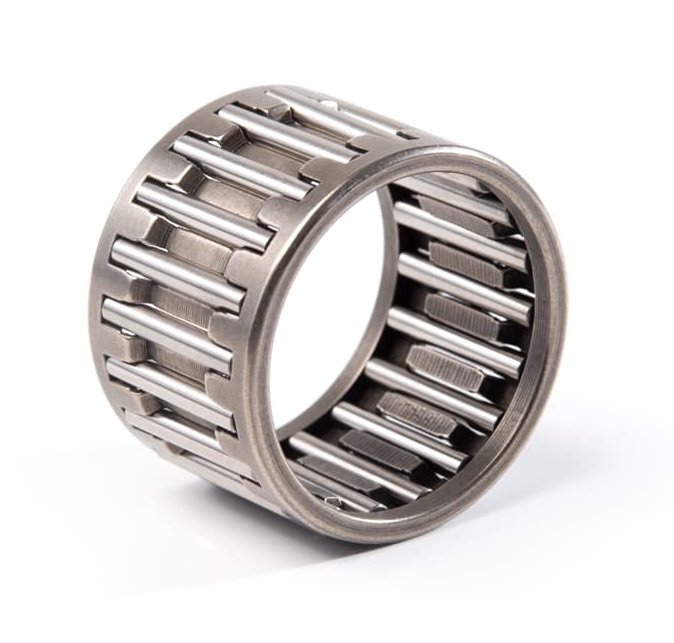
Needle roller bearings use thin cylindrical rollers that resemble needles to reduce friction and support heavy loads in compact spaces. These specialized bearings have rollers that are at least four times longer than their diameter, giving them unique advantages over standard roller bearings.
Definition and Core Characteristics
A needle roller bearing is a specialized type of roller bearing that uses long, thin cylindrical rollers as its rolling elements. These rollers typically have a length-to-diameter ratio of at least 4:1, which distinguishes them from standard roller bearings where rollers are only slightly longer than their diameter.
The narrow profile of needle bearings makes them ideal when you have limited radial space but need to support substantial loads. Your bearing arrangement can achieve a much smaller cross-sectional height compared to ball bearings or conventional roller bearings whilst maintaining high load capacity.
Needle roller bearings excel at handling radial loads through linear contact between the rollers and raceways. This contact pattern distributes forces across the entire length of each roller. The increased surface area created by multiple long, thin rollers gives these bearings exceptional load capacity relative to their compact size.
How Needle Roller Bearings Differ from Other Bearing Types
Needle bearings stand apart from ball bearings and standard roller bearings in several key ways. Ball bearings use spherical elements with point contact, whilst needle bearings achieve line contact through their cylindrical rollers. This difference means needle bearings can support significantly higher radial loads within the same envelope space.
Standard roller bearings use shorter, thicker rollers that require more radial space. Your needle bearing can fit in applications where a conventional roller bearing simply won’t work due to space constraints. The trade-off is that needle bearings typically cannot accommodate axial loads as effectively, with most radial designs handling only up to 5% of the radial load in the axial direction.
Speed capability differs as well. Caged needle bearings with fewer rollers create less friction and can operate at higher speeds than full complement designs.
Essential Components: Rollers, Cage, Rings
The needle rollers themselves are the heart of the bearing. These thin cylindrical elements are precisely manufactured to tight tolerances and create the load-carrying contact surfaces.
The cage (also called a retainer) keeps the rollers properly spaced around the bearing circumference. Caged assemblies reduce friction and allow higher operating speeds. Full complement designs omit the cage and pack in more rollers for maximum load capacity at lower speeds.
The outer ring provides the exterior raceway surface and structural support. In drawn cup designs, you’ll find a thin-walled stamped outer ring. Heavy-duty types use machined outer rings for greater rigidity and load capacity. Some needle bearing assemblies include an inner ring that fits over the shaft, whilst others use the shaft surface itself as the inner raceway to save space.
Key Features and Advantages
Needle roller bearings deliver exceptional performance through their unique design characteristics. These bearings combine compact dimensions with superior load-bearing capabilities, making them ideal for applications where space is limited but strength is critical.
High Load Capacity and Compact Design
Needle roller bearings handle heavy radial loads despite their small size. The thin, elongated rollers create line contact with the raceways rather than point contact. This design distributes weight across a larger surface area, allowing the bearing to support substantial forces.
The rollers have a high length-to-diameter ratio. This shape lets you fit more rolling elements into a tight space. More rollers mean greater radial load capacity without increasing the bearing’s cross-sectional height.
You can install these bearings in places where traditional ball bearings will not work. The compact design saves space in engines, gearboxes, and transmissions. Some types, like drawn cup bearings, use a thin outer ring that makes them even slimmer. Many needle roller bearings run directly on hardened shafts, eliminating the need for an inner ring and reducing overall assembly size.
Reduced Friction and Increased Efficiency
The cage inside caged needle roller bearings keeps the rollers properly spaced. This spacing prevents the rollers from rubbing against each other during operation. Less contact between rollers means lower friction and reduced heat generation.
Proper lubrication reaches all rolling elements more easily when a cage is present. Oil or grease flows between the separated rollers, creating a protective film on the raceways. This reduces wear and extends bearing life.
Lower friction translates to better energy efficiency in your machines. Motors and engines use less power to overcome internal resistance. You will notice smoother operation and reduced fuel or electricity consumption in high-speed applications.
High Rigidity and Durability
Multiple rollers provide excellent stiffness and precise motion control. The large number of load-bearing elements creates a rigid support structure. This rigidity matters in machine tools and gearboxes where accuracy is essential.
Quality materials enhance durability. Manufacturers use hardened steel such as GCr15 for the rollers and rings. Heat treatment and precision grinding improve the bearing’s ability to withstand high radial loads and continuous operation.
Proper maintenance extends service life significantly. Clean lubrication and correct installation help bearings last between 8,000 and 100,000 hours, depending on operating conditions. Continuous 24-hour operation in critical applications can achieve over 100,000 hours when reliability is properly managed.
Types of Needle Roller Bearings

Needle roller bearings come in several distinct configurations, each suited to different space constraints and load requirements. The main variations involve how many rollers are used and how the outer ring is manufactured.
Standard and Full Complement Designs
Standard needle roller bearings include a cage that separates and guides the cylindrical rollers. This cage prevents the needles from touching each other and ensures even spacing during rotation. The design reduces friction between rollers and allows for smoother operation at higher speeds.
Full complement needle bearings eliminate the cage entirely. Instead, they pack the maximum number of rollers into the available space. This configuration provides the highest possible load capacity for a given bearing size.
You’ll find full complement designs particularly useful when radial load capacity is your top priority. However, these bearings typically run at lower speeds than caged versions because the rollers make contact with each other. The added friction generates more heat during operation.
The choice between these bearing types depends on your specific requirements. If you need maximum load capacity in tight spaces, full complement designs deliver. For higher speed applications with moderate loads, standard caged bearings perform better.
Drawn Cup Needle Roller Bearings
Drawn cup needle roller bearings feature a thin-walled outer ring made from deep-drawn sheet steel. This manufacturing process creates a lightweight, compact bearing that fits into tight radial spaces. The outer ring is made of mild steel rather than the high-strength steels used in other bearing components.
These bearings are among the most economical options available. The drawn cup design allows manufacturers to produce them efficiently at scale.
You can press-fit drawn cup bearings directly into housing bores. The thin outer ring conforms slightly to the housing, which simplifies installation. These bearings work well in applications where weight and space matter more than extreme precision.
Machined Ring Needle Roller Bearings
Machined ring needle roller bearings use outer rings manufactured from high-strength steel through precision machining. This construction method produces more rigid and durable components compared to drawn cup designs. The thicker, machined rings can better suppress shock and vibration during operation.
These bearings handle heavier loads and more demanding conditions than drawn cup versions. The machined outer ring maintains tighter tolerances and provides superior dimensional stability.
You’ll typically use machined ring bearings in applications requiring higher precision or load capacity. They cost more than drawn cup designs but deliver better performance and longer service life. The robust outer ring also allows these bearings to operate at higher speeds whilst maintaining structural integrity.
Specialised Needle Roller Bearings

Beyond standard radial designs, needle roller bearings come in specialised configurations for specific loading conditions and applications. These variants handle axial loads, provide rolling support for cam systems, and combine multiple bearing functions in a single unit.
Needle Roller Thrust Bearings and Washers
Needle roller thrust bearings differ from standard needle bearings by managing axial loads rather than radial forces. These bearings use a set of needle rollers held in place by a cage, positioned between hardened thrust washers to handle forces along the shaft axis.
The design provides high axial load capacity whilst maintaining a compact axial height. Thrust needle roller bearing assemblies typically include shaft and housing washers made from hardened bearing steel, which serve as raceways for the needle rollers. You’ll find these bearings in applications where space is limited but significant axial forces must be supported.
Most thrust bearings cannot handle radial loads independently. When your application requires both axial and radial support, you must combine thrust needle roller bearings with separate radial bearings. The thrust washers distribute the load evenly across the rolling elements, preventing damage to the shaft and housing surfaces.
Cam Followers and Track Rollers
Cam followers and track rollers are specialised needle roller bearings designed to follow cam profiles or run along tracks. A cam follower consists of a thick-walled outer ring with a crowned or cylindrical running surface, mounted on a stud or bolt through its centre. The inner needle roller bearing supports the outer ring whilst allowing smooth rolling motion.
Track rollers feature similar construction but typically have wider outer rings to distribute loads across guide rails or tracks. Both types use needle rollers to achieve high radial load capacity in a compact design. The crowned outer surface on many roller followers helps prevent edge loading and misalignment issues.
These bearings handle combined radial and axial loads depending on their design. You can mount them directly onto machine frames or structures, making them ideal for conveyor systems, packaging equipment, and material handling applications.
Combined and Tapered Needle Roller Bearings
Combined needle roller bearings integrate multiple bearing functions into a single assembly. These units may pair radial needle rollers with angular contact ball bearings or combine needle rollers with tapered roller bearing elements to handle both radial and axial loads simultaneously.
Tapered designs use conical raceways and rollers to support combined loading. The taper angle allows the bearing to manage axial forces whilst maintaining the high radial capacity typical of needle bearings. This configuration proves particularly useful in gearboxes and transmissions where space constraints prevent using separate bearing types.
Combined bearings simplify assembly and reduce the number of components in your design. They also ensure proper preload and alignment between the different bearing elements, improving overall performance and reliability.
Engineering and Design Considerations

Needle roller bearings require careful engineering choices to match their unique geometry with specific application demands. Material quality, cage configuration, and load direction compatibility directly affect bearing performance and service life.
Load Directions: Radial vs Axial
Needle roller bearings excel at handling radial loads but have significant limitations with axial loads. The cylindrical shape of the needles and their alignment parallel to the shaft axis make them ideal for loads pressing perpendicular to the shaft. You cannot use standard needle roller bearings to carry axial loads acting along the shaft’s length.
Some designs incorporate thrust washers or special assemblies to handle minor axial forces. Needle roller and cage thrust assemblies can combine with radial needle bearings when you need limited axial load capacity. The radial-only design means you must account for shaft expansion and thermal growth in your mounting arrangement.
When axial loads are present, you need to pair needle bearings with separate thrust bearings or choose a different bearing type altogether.
Cage Types and Their Roles
The cage guides and separates the needle rollers whilst maintaining proper spacing during rotation. Common cage materials include pressed steel, machined brass, and polymer composites. Steel cages offer high strength for heavy-duty applications, whilst polymer cages reduce friction and operating noise.
The cage design affects how rollers distribute loads across the raceway surface. A well-designed cage prevents roller skewing and end-contact friction, which are more pronounced in needle bearings due to their high length-to-diameter ratio. You’ll find cages particularly critical in high-speed applications where centrifugal forces can affect roller stability.
Some needle roller bearings operate without cages in full-complement designs, packing more rollers into the same space for maximum load capacity at lower speeds.
Influence of Heat Treatment and Bearing Steel
Bearing steel quality and heat treatment directly determine load capacity and wear resistance. Manufacturers typically use through-hardened chromium steel (such as 100Cr6) that undergoes precise heat treatment to achieve hardness values between 58 and 65 HRC.
The heat treatment process creates the proper microstructure for rolling contact fatigue resistance. Case-hardened steels provide a hard surface layer whilst maintaining a tough core, useful when you need to prevent surface damage without sacrificing impact resistance.
Your bearing’s operating temperature range depends on the steel grade and heat treatment. Standard bearing steels perform well up to 120°C, but special treatments extend this to 200°C or higher for demanding applications.
Sizes, Standards, and Interchangeability

Needle roller bearings follow standardised sizing systems that ensure compatibility across manufacturers and applications. These standards define key dimensions like bore diameter and outer diameter, making it easier to select and replace bearings when needed.
Bore Diameter, Outer Diameter, and Sizing
The bore diameter (Fw) represents the inner measurement of the bearing where it fits onto your shaft. The outer diameter (D) measures the external size that fits into your housing. Width (C) determines the bearing’s axial length.
These three dimensions work together to define the bearing’s load capacity and space requirements. A bearing with a 10mm bore diameter, 17mm outer diameter, and 12mm width would be designated as NK10/12. Smaller bore diameters typically range from 3mm to 12mm, whilst larger industrial bearings can exceed 100mm.
You’ll find that needle roller bearings can handle higher loads than ball bearings of similar size. This is because the rollers make line contact rather than point contact with the raceways.
International and DIN Standards
Needle roller bearings conform to several international standards, including ISO 492, DIN 620, JIS B1514, and ABEC. These standards specify dimensional tolerances, running accuracy, and manufacturing quality. DIN 620 is particularly important in Europe, as it defines the boundary dimensions and tolerance classes for roller bearings.
ISO 492 establishes the tolerance classes that affect bearing precision. Your bearing’s performance depends on meeting these tolerance requirements. When you’re sourcing bearings internationally, these standards ensure that components from different manufacturers will fit your application properly.
Needle Roller Bearing Size Charts
A needle roller bearing size chart lists all critical dimensions in a standardised table format. You can use these charts to quickly identify the correct bearing for your application by matching your required bore diameter, outer diameter, and width.
Most manufacturers provide size charts organised by bearing type, such as HK, NK, NA/RNA, or TA series. For example, an HK0608 bearing has a 6mm bore, 10mm outer diameter, and 8mm width. The charts also include weight specifications and bearing designation numbers that help with ordering and cross-referencing between manufacturers.
Installation and Assembly Guidance

Proper installation of needle roller bearings directly affects their performance and lifespan. Press fit methods require precise tolerances, whilst correct lubrication ensures smooth operation and prevents premature wear.
Press Fit Techniques and Tolerances
Press fit installation demands controlled, uniform force application to seat bearings correctly without damaging internal components. Use a hydraulic or mechanical press with specialized fitting tools that apply pressure only to the outer ring, never to the rolling elements. The tool should include a pilot guide to maintain alignment during insertion.
Measure your housing bore and shaft diameter with a bore gauge before installation. Dimensions must fall within manufacturer-specified tolerances. A fit that’s too tight generates excessive stress, whilst a loose fit causes movement and accelerated wear. Research indicates that dimensional variance of even a few microns increases friction and shortens bearing life.
Shrink fitting offers an alternative for applications requiring extreme interference fits. Heat the housing to 80-120°C to expand the bore diameter, allowing easier bearing insertion. As the housing cools, it contracts and locks the bearing in place. This method reduces installation force by up to 60% and minimizes surface damage.
Never strike bearings with hammers or apply excessive force, as this deforms rollers and races. For smaller bearings, use bearing drivers and washers to distribute pressure evenly during manual installation.
Lubrication and Maintenance Practices
Apply the manufacturer-recommended lubricant before installation to reduce friction and prevent corrosion. Spread a thin, consistent layer on both the shaft and housing bore. Studies show that up to 80% of bearing failures stem from lubrication problems, making this step critical for reliability.
Choose your lubricant based on operating conditions including temperature, load, and speed. The lubricant must maintain its properties throughout the bearing’s service life. Insufficient lubrication causes overheating and premature failure, whilst excess lubricant increases drag and operating temperatures.
Keep all components clean during assembly. Ensure the shaft, housing, and bearing surfaces are free from dirt, debris, and burrs. Even microscopic contaminants cause pitting and surface wear. Work in a clean environment and wear appropriate gloves designed for precision assembly work.
After installation, rotate the bearing by hand to verify smooth operation. Monitor for unusual resistance, noise, or vibration that indicates improper seating or contamination.
Applications of Needle Roller Bearings
Needle roller bearings serve critical functions across numerous industries due to their ability to support heavy radial loads whilst occupying minimal space. Their compact design and high load capacity make them essential components in automotive systems, industrial machinery, pumps, and aerospace equipment where space constraints demand efficient engineering solutions.
Automotive Transmissions and Engine Components
Automotive applications rely heavily on needle roller bearings throughout transmissions, engines, and drivetrain systems. These bearings handle the intense radial loads and high-speed rotation found in gearboxes, where they support planetary gear sets and transmission shafts. The compact cross-section allows engineers to design smaller, lighter transmission cases whilst maintaining strength and durability.
Engine components such as rocker arm pivots use needle roller bearings to reduce friction and wear during continuous operation. The bearings also appear in connecting rod assemblies, camshaft supports, and balance shaft systems. Steering systems incorporate them in steering columns and power steering pumps, where smooth operation and reliability are essential.
Drive shafts and universal joints benefit from the high stiffness and precision that needle roller bearings provide. Torque converters use drawn cup needle roller bearings because their thin outer rings fit into tight spaces within the converter housing. The automotive sector values these bearings for their ability to withstand extreme temperatures, vibration, and continuous operation whilst requiring minimal maintenance.
Textile Machinery, Conveyor Systems, and Power Tools
Textile machinery operates at high speeds and requires bearings that can handle both radial loads and rapid rotation. Needle roller bearings support spinning and weaving equipment, where their low friction characteristics improve energy efficiency and reduce heat generation. The precision and rigidity of these bearings help maintain tight tolerances in thread tension and fabric quality.
Conveyor systems in manufacturing facilities use needle roller bearings in drive rollers and idler pulleys. The bearings support the heavy loads of materials moving through production lines whilst fitting within the limited space available in roller assemblies. Their durability reduces downtime and maintenance costs in operations that run continuously.
Power tools such as drills, grinders, and impact wrenches incorporate needle roller bearings in their motor assemblies and gear trains. The bearings withstand the shock loads and vibration inherent in these applications. Full complement needle roller bearings often appear in power tools where maximum load capacity matters more than speed, whilst caged types suit high-speed applications like die grinders.
Pumps, Compressors, and Robotics
Pumps and compressors demand bearings that can operate reliably under continuous loads and varying speeds. Needle roller bearings support pump shafts, impellers, and piston assemblies in both hydraulic and pneumatic systems. Their high radial load capacity and compact design allow manufacturers to produce smaller, more efficient pumping equipment.
Compressor applications particularly benefit from thrust needle roller bearings, which handle the axial forces generated during compression cycles. Reciprocating compressors use these bearings in connecting rods and crankshaft assemblies. The bearings’ ability to operate in oil-rich environments makes them suitable for lubricated compressor systems.
Robotic systems require precision and stiffness in their joints and actuators. Needle roller bearings provide the rigidity needed for accurate positioning whilst supporting the radial loads from robot arm movements. Caged needle roller bearings work well in high-speed robotic applications where smooth motion and minimal friction are critical. The compact size allows engineers to design slimmer robotic joints without sacrificing strength or performance.
Aerospace and Specialised Sectors
Aerospace applications demand bearings that perform reliably under extreme conditions including high speeds, temperature variations, and significant loads. Aircraft engines use needle roller bearings in turbine assemblies and gearbox systems where weight reduction is critical. The high strength-to-weight ratio of these bearings helps reduce overall aircraft weight whilst maintaining structural integrity.
Landing gear systems incorporate needle roller bearings in actuator assemblies and retraction mechanisms. These bearings must withstand shock loads during landing whilst operating in harsh environmental conditions. Special materials and treatments enhance their performance in extreme temperatures found at high altitudes.
Medical devices use precision needle roller bearings in surgical instruments and diagnostic equipment where accuracy and smooth operation are essential. The bearings’ compact size allows them to fit within small medical tools whilst providing reliable motion control. Specialised sectors such as marine equipment, printing machinery, and precision measuring instruments also rely on needle roller bearings for their unique combination of size, strength, and accuracy.
Performance Factors and Common Challenges
Needle roller bearings deliver exceptional performance in compact spaces, but their effectiveness depends on proper design considerations and maintenance. Rigidity ensures precise operation, whilst contamination and operational limits require careful management to achieve optimal service life.
Rigidity, Wear, and Longevity
High rigidity is one of the defining characteristics of needle roller bearings, achieved through the large number of rolling elements in contact with the outer ring and inner ring surfaces. This stiffness provides precise shaft guidance and maintains dimensional accuracy under load. The extensive line contact between the needle rollers and raceways distributes forces evenly, reducing localised stress concentrations that can accelerate wear.
Wear patterns vary depending on whether your bearing includes an inner ring or operates directly on the shaft surface. When needle roller assemblies run without an inner ring, the shaft itself acts as the raceway and must have adequate hardness—typically 58-62 HRC—to prevent premature surface damage. Even with proper hardness, inadequate lubrication accelerates wear on both the needles and raceways. Regular inspection of running surfaces helps identify early signs of fatigue, pitting, or scoring before they compromise bearing integrity.
The longevity of your needle roller bearing depends primarily on load conditions, lubrication quality, and operating environment. Properly maintained bearings in clean conditions can achieve their calculated service life, whilst those exposed to contamination or poor lubrication may fail prematurely.
Contamination and Sealing Issues
Contamination poses one of the most significant threats to needle roller bearing performance. Dust, metal particles, moisture, and other foreign materials infiltrate the bearing and act as abrasive agents between the rolling elements and raceways. This contamination causes accelerated wear, increased friction, and potential bearing seizure.
Many needle roller assemblies lack integral seals due to their compact design, making them particularly vulnerable to environmental contaminants. You can address this through external sealing arrangements, such as shaft seals or housing covers positioned adjacent to the bearing. Drawn cup bearings are available in closed-end configurations that provide some protection whilst retaining lubricant within the bearing cavity.
Moisture contamination requires special attention as it degrades lubrication effectiveness and promotes corrosion on bearing surfaces. In harsh environments, you should consider bearings with enhanced sealing solutions or implement scheduled relubrication intervals to flush out contaminants and restore protective film thickness.
Operational Limitations and Solutions
Needle roller bearings excel at handling radial loads but have limited capacity for axial forces. Most standard designs cannot accommodate thrust loads without additional support from separate thrust bearings or combined bearing arrangements. Understanding this limitation is essential when designing assemblies subjected to multi-directional forces.
Misalignment sensitivity presents another operational challenge. The slender profile of needle rollers means that even small angular misalignment—typically beyond 0.5 degrees—can cause edge loading and premature failure. You must ensure proper housing machining tolerances and correct installation procedures. Shaft and housing bore concentricity should be maintained within specified limits to prevent uneven load distribution across the needle roller assemblies.
Speed limitations vary by bearing type and lubrication method. Whilst needle roller bearings can operate at high speeds, inadequate lubrication at elevated RPMs generates excessive heat and reduces bearing life. You should consult manufacturer speed ratings and ensure your lubrication strategy matches operational demands, whether through grease, oil bath, or circulation systems.
Selection Criteria and Sourcing
Selecting the right needle roller bearing requires evaluating load requirements, space constraints, and operating conditions, whilst ensuring you source components that meet recognised quality standards.
Choosing the Right Needle Roller Bearing
Your primary consideration when selecting needle roller bearings is radial load capacity. These bearings excel at supporting high radial loads in confined spaces due to their large contact surface area between the rollers and raceways.
You need to assess your available radial space first. Needle bearings have a small cross-sectional height compared to standard roller bearings, making them ideal when design envelopes are restricted.
Consider these key selection parameters:
- Radial load magnitude – Calculate the actual forces your application will generate
- Speed requirements – Higher speeds may require specific cage designs or lubrication
- Temperature range – Operating environment affects material selection
- Shaft and housing tolerances – Precision fits ensure proper performance
- Axial load presence – Most needle bearings handle only minimal axial forces (typically under 5% of radial load)
Space-saving applications like automotive gearboxes, connecting rods, and rocker arm assemblies typically benefit most from needle roller bearings. You should note whether you require drawn cup bearings with integrated outer rings or if you need separate components.
Compatibility with Other Bearing Types
You may find situations where combining needle bearings with other bearing types optimises your design. Standard roller bearings or ball bearings can handle axial loads that needle bearings cannot accommodate effectively.
When your application involves both significant radial and axial forces, you should specify needle roller bearings for radial support whilst adding thrust bearings or angular contact ball bearings for axial loads. This combination approach maximises load capacity whilst minimising overall assembly size.
Needle roller and cage assemblies without rings offer the most compact solution when you can use hardened shaft and housing surfaces as raceways. However, drawn cup needle roller bearings with integrated outer rings simplify installation when housing machining is limited.
Quality, Certification, and International Sourcing
You must verify that needle roller bearings meet ISO dimensional standards to ensure interchangeability and reliable performance. Reputable manufacturers provide technical documentation specifying load ratings, dimensional tolerances, and material specifications.
Request certification documents that confirm bearing quality, particularly for critical applications. Look for suppliers who follow ISO 9001 quality management systems and provide traceability for bearing lots.
International sourcing expands your options, but you should verify that imported bearings comply with relevant standards. Compare specifications carefully, as dimensional variations outside ISO tolerances can cause premature failure or performance issues.
Price considerations matter, yet the lowest-cost option rarely delivers optimal value. Factor in bearing life expectancy, maintenance requirements, and potential downtime costs when evaluating suppliers.
Frequently Asked Questions
Needle roller bearings raise specific questions about their applications, construction, and performance characteristics. The answers below address common concerns about materials, sizing, appearance, and how these bearings compare to other types.
Where are needle roller bearings commonly used in automotive applications?
You’ll find needle roller bearings in gearboxes, where they handle the high radial loads between gears whilst taking up minimal space. They’re also used in connecting rods within engines to support the reciprocating motion.
Automotive transmissions rely on these bearings because their compact design allows engineers to fit more components in tight spaces. Universal joints and drive shafts use needle roller bearings to manage radial forces during rotation.
What materials are needle roller bearings typically made from?
Needle roller bearings are made from high-quality steel that undergoes precision machining and heat treatment. This process ensures the bearings can withstand heavy loads whilst maintaining durability.
Some manufacturers use chrome steel or case-hardened steel for the rolling elements. The cage or retainer may be made from steel, brass, or synthetic materials depending on the application requirements.
How do needle roller bearings compare with ball bearings in load capacity and performance?
Needle roller bearings offer greater load capacity than ball bearings of similar size because they use cylindrical rollers instead of spherical balls. The larger contact area between the rollers and raceways distributes loads more effectively.
Ball bearings use point contact, whilst needle roller bearings use line contact. This difference means needle roller bearings can handle higher radial loads in a smaller space.
However, ball bearings typically perform better at higher speeds and can handle combined radial and thrust loads more easily. Needle roller bearings excel in applications where space is limited and radial loads are the primary concern.
What is another name for a needle roller bearing, and are there different types?
Needle roller bearings are sometimes called needle bearings. The name comes from the thin, needle-like shape of their rolling elements.
Several types exist to suit different applications. Drawn cup needle roller bearings feature a thin-walled outer cup and are available with or without inner rings.
Needle roller thrust bearings handle axial loads using cylindrical rollers arranged in a cage. Full complement needle bearings contain the maximum number of rollers without a cage, providing maximum load capacity but lower speed capability.
Caged needle bearings use fewer rollers separated by a retainer, which reduces friction and allows for higher operating speeds.
How do you identify the correct needle roller bearing size from a size chart or catalogue?
You need to measure three key dimensions: the inner diameter, the outer diameter, and the width or thickness. These measurements allow you to match your bearing to catalogue specifications.
Most manufacturers list bearings using a designation code that includes these dimensions. You’ll typically find measurements in millimetres in catalogues.
Check whether your application requires a bearing with or without an inner ring, as this affects the inner diameter measurement. If you’re replacing an existing bearing, note its designation code for an exact match.
What do needle roller bearings look like, and how are they constructed?
Needle roller bearings contain long, thin cylindrical rollers with a length-to-diameter ratio typically greater than four. These rollers are noticeably thinner and longer than those in standard roller bearings.
The rollers sit between an inner and outer raceway, or in some designs, they roll directly on a hardened shaft surface. A cage or retainer keeps the rollers evenly spaced and prevents them from touching each other.
In drawn cup designs, the outer ring is a thin-walled steel cup that surrounds the roller assembly. The compact construction gives these bearings their characteristic low-profile appearance compared to other bearing types.