What Are Thrust Bearings? Types, Uses and How They Work
Thrust bearings are designed to support axial loads—forces that act along the length of a shaft rather than across it. They are widely used in gearboxes, pumps, automotive assemblies, machine tools and industrial equipment where rotating components need to remain accurately positioned under end load. This guide explains how thrust bearings work, the principal types available, where they are used and the checks you should make before choosing a replacement.
What Are Thrust Bearings?
Thrust bearings are a family of rotary bearings developed specifically to carry axial load, which is also called thrust load. Axial force acts parallel to the shaft. This is different from radial force, which acts at right angles to the shaft.
Consider a vertical pump, for example. The weight of the rotating assembly and the hydraulic force can push along the shaft. A thrust bearing supports that end load and helps prevent the shaft from moving out of position. In a gearbox, thrust can be produced by helical gears as they transmit torque. The correct bearing arrangement keeps the gears aligned and limits unwanted axial movement.
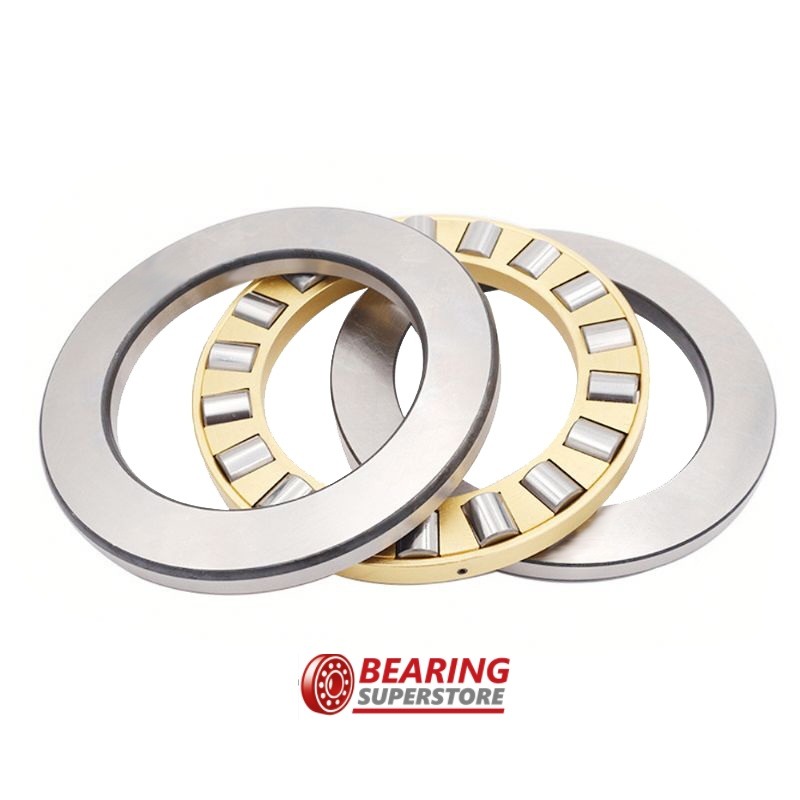
Most rolling-element thrust bearings contain three basic components:
- Shaft washer: the ring fitted against the rotating shaft or shaft shoulder.
- Housing washer: the ring supported by the stationary housing.
- Rolling-element and cage assembly: balls or rollers held at the correct spacing between the raceways.
The exact construction varies by bearing type. Some assemblies are separable, which can make installation easier, but also means the washers must be fitted in the correct positions.
How Do Thrust Bearings Work?
Thrust bearings transfer axial force from one rotating or stationary component to another through their rolling elements. The shaft washer and housing washer contain raceways. As the shaft turns, the balls or rollers travel around these raceways while the cage keeps them separated.
Rolling contact creates much less friction than allowing the shaft face to slide directly against the housing. The raceway geometry spreads the load across the rolling elements, while the washers pass that load into the shaft shoulder and housing.
SKF states that standard thrust ball bearings are designed for axial loads and should not be subjected to radial load. Where radial and axial loads act together, the complete bearing arrangement may need a separate radial bearing or a bearing specifically designed for combined loads.
Axial Loads Versus Radial Loads
Identifying the direction of the load is the first step in bearing selection. Choosing a radial bearing for a strong axial load—or expecting a standard thrust ball bearing to support radial force—can lead to heat, wear and early failure.
| Load type | Direction of force | Typical bearing solution | Example |
|---|---|---|---|
| Axial load | Parallel to the shaft | Thrust ball or thrust roller bearing | Vertical pump shaft |
| Radial load | Perpendicular to the shaft | Deep-groove ball, cylindrical roller or needle bearing | Conveyor roller |
| Combined load | Axial and radial forces together | Angular-contact, tapered roller or suitable spherical roller arrangement | Helical gearbox |
Main Types of Thrust Bearings
The best design depends on the load, speed, available space, alignment and operating environment. The following are the main thrust bearing types encountered in automotive and industrial machinery.
Thrust Ball Bearings
Thrust ball bearings use balls between flat or profiled raceway washers. They offer low friction and are suitable for many light-to-moderate axial-load applications. They are available as single-direction and double-direction designs.
A single-direction bearing carries axial load in one direction. A double-direction bearing can locate the shaft and carry axial load in either direction. Neither arrangement should be expected to support radial load unless the complete assembly includes another bearing for that purpose.
Cylindrical Roller Thrust Bearings
Cylindrical roller thrust bearings use short cylindrical rollers, giving a larger contact area than balls. This makes them suitable for heavier axial loads and relatively stiff arrangements. They are commonly found in heavy gearboxes, extruders, presses and other industrial machinery.
They generally require good alignment. If the shaft and housing washers are not parallel, the load may concentrate towards one end of the rollers and shorten bearing life.
Needle Roller Thrust Bearings
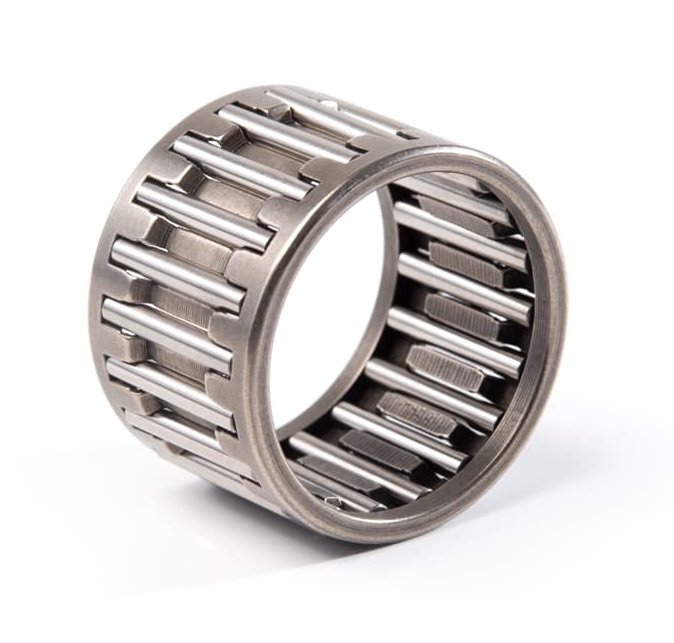
Needle roller thrust bearings use long, small-diameter rollers to provide useful axial capacity within a very small axial cross-section. They are often selected for compact transmissions, power tools and machine assemblies where space is limited.
Depending on the application, the cage and roller assembly may run between separate thrust washers or directly against suitably hardened and finished adjacent surfaces.
Spherical Roller Thrust Bearings
Spherical roller thrust bearings are designed for very heavy axial loads and can tolerate a degree of misalignment because of their spherical raceway geometry. Suitable designs may also accommodate a simultaneously acting radial load, but the permitted ratio and minimum load requirements must be checked in the manufacturer’s data.
These bearings are used in demanding equipment such as crushers, marine propulsion systems, large gearboxes, industrial fans and heavy vertical shafts. They still require the correct load direction, lubrication and mounting arrangement.
Tapered Roller Thrust Bearings
Tapered roller thrust bearings use tapered rollers arranged so their geometry controls heavy thrust force with good stiffness. Timken lists tapered, spherical, cylindrical, crossed-roller and ball designs among its principal thrust-bearing families.
Tapered thrust designs are used where high axial capacity, rigidity and controlled shaft location are important, including rolling mills, crane hooks, drilling equipment and heavy machine tools.
Where Are Thrust Bearings Used?
Thrust bearings appear wherever rotation produces a meaningful end load. Common applications include:
- Gearboxes: controlling axial force generated by helical or bevel gears.
- Pumps and compressors: supporting impeller or rotor thrust and maintaining shaft position.
- Automotive transmissions: locating gears, clutch components and rotating shafts.
- Machine tools: providing accurate axial positioning in spindles, lead screws and rotary tables.
- Agricultural equipment: supporting loaded shafts in compact, contaminated operating environments.
- Marine equipment: managing propeller-shaft thrust and other heavy end loads.
- Turntables and lifting equipment: supporting axial force in low-speed, high-load assemblies.
- Power tools and small mechanisms: using miniature thrust ball or needle assemblies where space is restricted.
The application alone does not determine the bearing. Two pumps, for example, may require completely different solutions because of differences in speed, load, shaft size, temperature and lubrication.
How to Choose the Right Thrust Bearing
Use the existing part number whenever it can be read and verified, but do not rely on dimensions alone when replacing a critical bearing. Work through the following checks.
1. Confirm the load direction
Determine whether the force acts in one axial direction, both axial directions or as a combination of axial and radial load. A single-direction thrust ball bearing is not interchangeable with a double-direction design.
2. Calculate the operating load
Check both the dynamic and static load requirements, allowing for shock, start-up force and occasional overload. Compare the calculated load with the manufacturer’s load ratings rather than selecting solely by bore and outside diameter.
3. Check speed and temperature
Bearing design, cage material and lubricant all influence permissible speed. A bearing that is suitable for a slow lifting mechanism may not be suitable for a continuously running high-speed spindle.
4. Measure the available space
Record the bore diameter, outside diameter and overall height. Also inspect shaft shoulders, housing seats, fillet radii and any locating features. A bearing can match the headline dimensions but still be unsuitable for the surrounding assembly.
5. Assess alignment and rigidity
Rigid ball and cylindrical designs need accurately aligned supporting surfaces. Where shaft deflection or housing misalignment cannot be avoided, a spherical roller thrust bearing may be more appropriate—subject to the manufacturer’s application data.
6. Consider contamination and lubrication
Dust, swarf, water and degraded lubricant can damage rolling elements and raceways. Choose sealing and lubricant arrangements suited to the environment, and follow the bearing or equipment manufacturer’s relubrication guidance.
7. Verify the complete designation
Suffixes can identify cage material, internal design, accuracy, clearance or other features. Meanings vary between manufacturers, so check the relevant catalogue before accepting a substitute.
Single-Direction and Double-Direction Thrust Bearings
A single-direction thrust bearing normally consists of a shaft washer, a housing washer and one ball-and-cage assembly. It locates the shaft axially and supports load in one direction.
A double-direction bearing uses a central shaft washer, two housing washers and two rolling-element assemblies. It can locate the shaft and carry thrust in either direction. Double-direction does not mean double the rating, and it does not make the bearing suitable for radial load. Check the catalogue value for each direction and the correct surrounding shoulders.
Understanding Thrust Bearing Numbers and Dimensions
Most product listings show three core dimensions:
- Bore diameter (d): the nominal shaft size.
- Outside diameter (D): the bearing’s maximum outer size.
- Height (T or H): the installed axial thickness.
The designation identifies the bearing series and size, but similar-looking codes are not automatically interchangeable. Check the full part number, manufacturer, load ratings, speed limits, washer arrangement and cage specification.
Bearing Superstore stocks thrust products ranging from the compact F6-14G miniature thrust ball bearing to larger industrial designs such as the 29412M spherical roller thrust bearing. Double-direction applications may use a design such as the 52412 double-direction thrust bearing, while stainless-steel requirements can be served by options including the SS51111 stainless-steel thrust bearing.
Installation, Lubrication and Maintenance
Install the correct washer in the correct position
The shaft washer and housing washer can have different bore fits. Reversing them can allow the wrong ring to rotate or creep. Confirm the arrangement from the bearing drawing before assembly.
Apply fitting force safely
Do not transmit mounting force through the balls or rollers. Components should be clean, square and properly supported. Use suitable fitting tools and the method recommended for the bearing size and fit.
Use the specified lubricant
Grease is common in moderate-speed, enclosed applications, while oil may be preferred where speed or temperature requires improved heat removal. Lubricant viscosity, quantity and relubrication interval should come from the bearing or machinery manufacturer’s guidance.
Keep the bearing clean
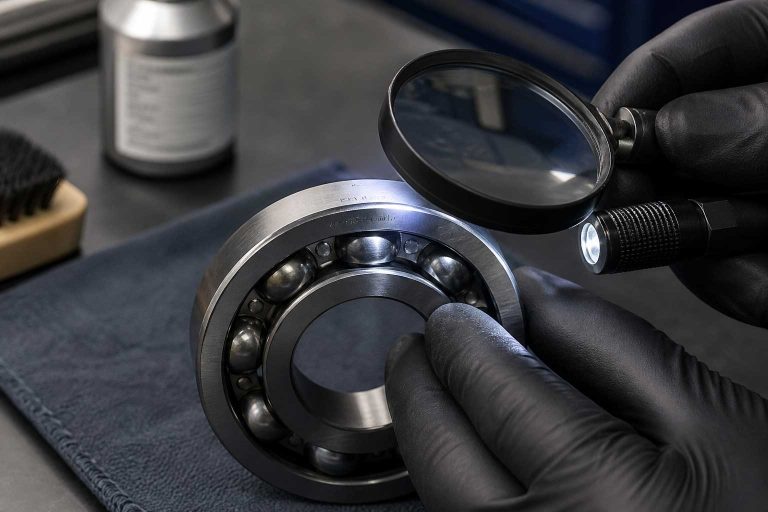
Even small particles can indent highly loaded raceways. Store bearings in their packaging until required, clean the surrounding components and avoid wiping precision surfaces with dirty cloths.
Common Signs of Thrust Bearing Failure
Possible warning signs include:
- increasing vibration or rumbling noise;
- unusual heat around the bearing housing;
- excessive axial movement or loss of shaft location;
- darkened, burnt or contaminated lubricant;
- pitting, flaking or scoring on the raceways;
- a damaged cage or uneven wear around the washers; and
- repeated seal or gear-alignment problems caused by shaft movement.
These symptoms do not always prove that the bearing itself was the original cause. Check alignment, fits, lubrication, load and the condition of adjoining components before fitting a replacement.
Frequently Asked Questions About Thrust Bearings
Can a thrust bearing carry radial load?
A standard thrust ball bearing is intended for axial load and should not carry radial load. Some spherical, tapered or combined designs can accommodate both load components, but only within the manufacturer’s stated ratings.
What is the difference between a thrust ball bearing and a thrust roller bearing?
Thrust ball bearings use balls and generally provide low friction for light-to-moderate axial loads. Roller designs provide a larger contact area and are normally selected when greater axial capacity or stiffness is required.
Can thrust bearings work in both directions?
Yes, but the bearing must be a double-direction design or the arrangement must use two correctly opposed single-direction bearings. A single-direction bearing supports thrust in only one direction.
What causes a thrust bearing to fail?
Common causes include excessive or unintended radial load, incorrect installation, misalignment, inadequate lubrication, contamination, overloading and insufficient support from the shaft shoulder or housing.
Which way round should a thrust bearing be fitted?
The washer intended for the shaft must locate on the shaft, while the housing washer must seat against the stationary housing. Because bore fits and raceway details vary, use the manufacturer’s drawing for the exact bearing.
Can I replace a thrust bearing using dimensions alone?
Dimensions are essential, but they are not enough for a critical application. Confirm the complete designation, direction of load, dynamic and static ratings, speed limit, cage design and any suffixes before ordering.
Find the Correct Thrust Bearing
The correct thrust bearing must match the shaft, housing and operating conditions—not just the available space. Identify the load direction first, verify the complete part number and check the manufacturer’s technical data before installation.
Bearing Superstore supplies miniature, single-direction, double-direction, stainless-steel and spherical roller thrust bearings for a wide range of automotive and industrial uses. If you cannot find the exact size or designation, contact Bearing Superstore with the old bearing number and measured dimensions for help locating the correct replacement.
Further technical information: consult the SKF thrust ball bearing guidance and the Timken thrust bearing range when checking load capabilities and design differences.