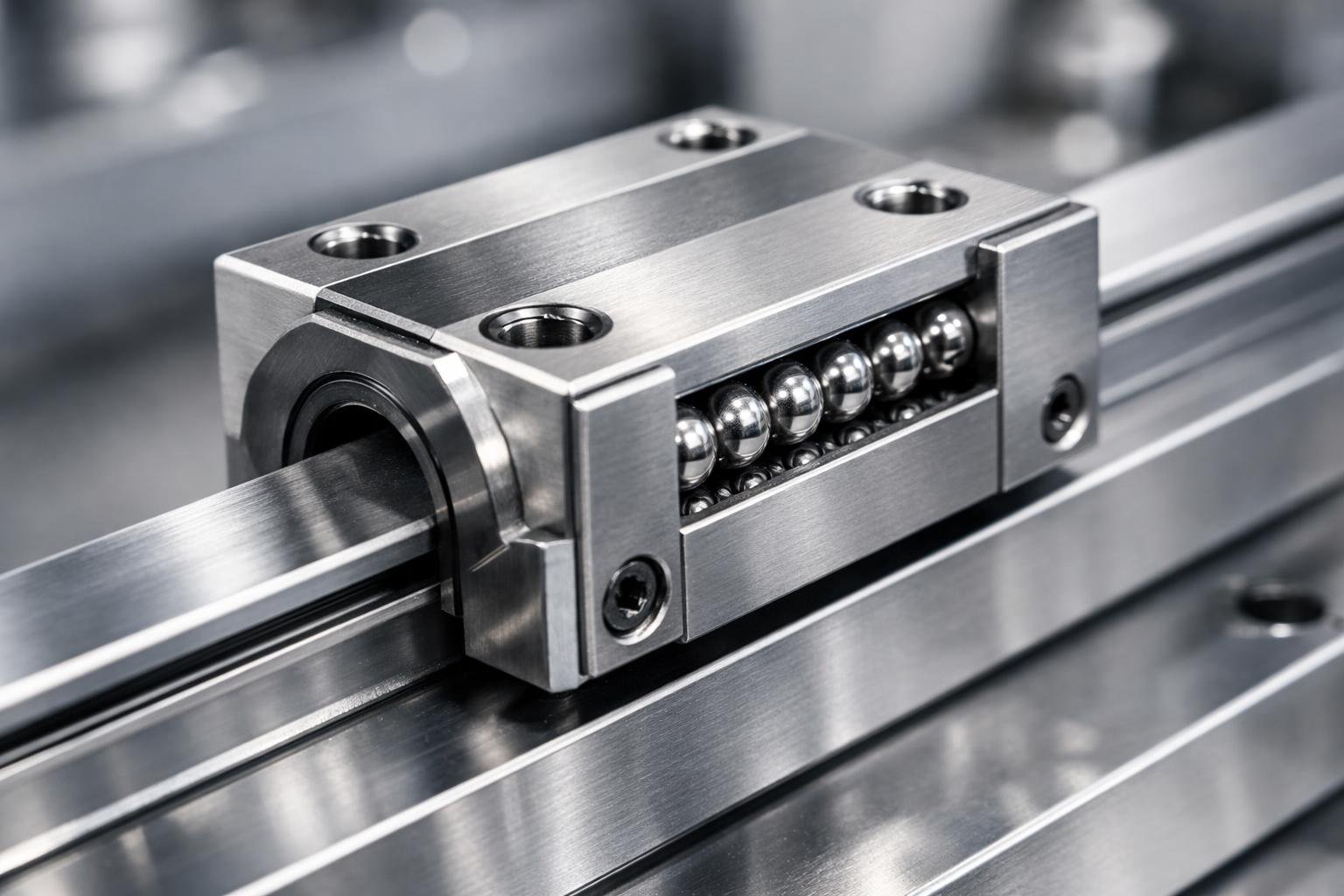
What Are Linear Bearings? Comprehensive Guide to Linear Motion Solutions
Linear bearings are mechanical components that enable smooth, low-friction movement along a straight path.
They serve as guides for objects moving on linear shafts or rails, making them essential in machines that require precise, controlled motion.
From 3D printers to industrial robots, these bearings keep equipment running smoothly and accurately.
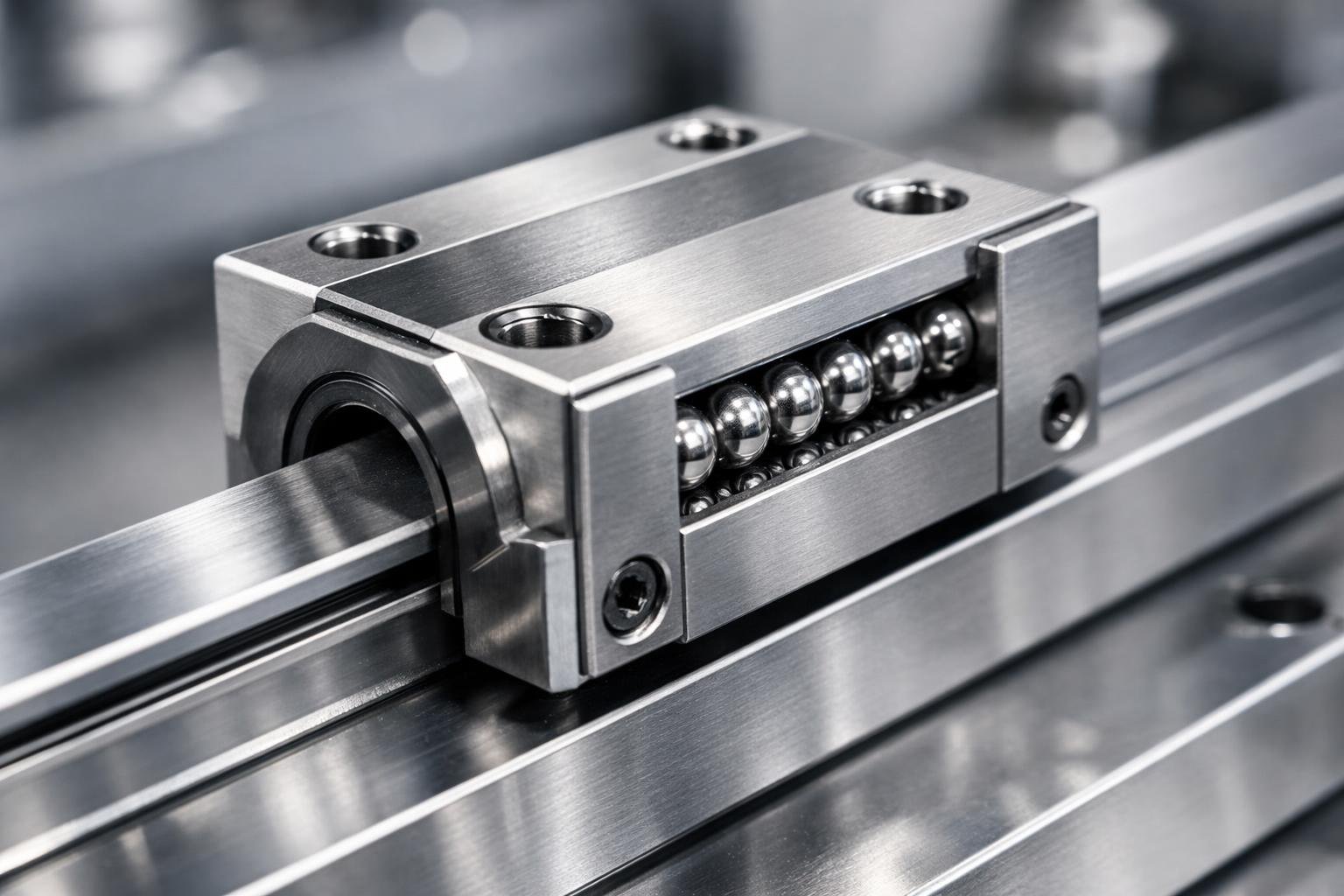
Linear bearings work by using rolling elements like balls or rollers arranged between an outer housing and a guide shaft.
This lets parts glide along a straight line with barely any resistance.
The rolling action transforms what would be dragging motion into efficient, smooth movement.
That means less wear on your equipment and better performance over time.
Understanding linear bearings helps you make smarter choices about your machinery.
Whether you’re designing a new system, keeping old machines going, or looking for upgrades, knowing how these components work—and which types fit different jobs—can save time and money.
Key Takeaways
- Linear bearings use rolling elements to enable smooth, precise movement along straight paths with minimal friction.
- Different types of linear bearings suit different applications based on load capacity, speed requirements, and environmental conditions.
- Proper selection, lubrication, and maintenance of linear bearings ensure optimal performance and longer service life.
Defining Linear Bearings
Linear bearings are mechanical components that enable smooth, controlled movement along a straight path while minimizing friction between moving parts.
They achieve this through rolling elements like balls or rollers, or through sliding surfaces enhanced with lubrication.
What Makes a Bearing Linear?
A bearing becomes linear when it constrains motion to a single straight axis rather than allowing rotation.
Your linear bearing does this through its basic design—a carriage or bushing traveling along a fixed rail or shaft, moving in only one direction.
The key here is the motion path.
Linear bearings use guide rails, shafts, or tracks that define a straight trajectory for the moving part.
This is completely different from radial bearings, which support spinning motion around a central point.
Rolling element linear bearings use balls or cylindrical rollers that recirculate through the carriage.
These rolling elements travel along hardened tracks, creating multiple contact points that distribute loads and keep things moving smoothly.
Plain linear bearings, by contrast, rely on a sliding interface where the bearing sleeve moves directly along the shaft surface, typically with some kind of lubrication or self-lubricating material to cut down on wear.
Comparison of Linear and Rotary Bearings
The main difference? It comes down to the type of motion each bearing supports.
Rotary bearings enable circular movement around a fixed axis, while linear bearings guide straight-line motion along a defined path.
Key Differences:
| Feature | Linear Bearings | Rotary Bearings |
|---|---|---|
| Motion Type | Straight path | Circular rotation |
| Load Distribution | Along rail length | Around bearing ring |
| Typical Applications | CNC machines, conveyor systems | Motors, wheels, gearboxes |
| Friction Control | Rolling elements or sliding surfaces | Ball or roller races |
Linear bearings have to handle a mix of loads at once.
You’ll see radial loads (perpendicular to the motion path), axial loads (along the direction of travel), and moment loads that try to twist things.
Rotary bearings mostly manage radial and thrust loads in circular patterns.
The installation requirements are different, too.
Linear systems need precise alignment between rails and carriages to avoid binding or early wear.
Rotary bearings have their own needs—proper shaft fits and housing tolerances—but don’t demand such long stretches of perfect alignment.
How Linear Bearings Work
Linear bearings reduce friction to enable smooth movement along a straight path through ball bearings that roll between an outer sleeve and a shaft or rail surface.
Basic Operating Principle
Linear bearings turn sliding friction into rolling friction.
When you move one along a shaft, the ball bearings inside roll against both the shaft and the outer sleeve, so you get far less resistance than if the surfaces were just sliding.
The ball bearings are arranged in rows and kept in place by cages.
As the bearing moves, these balls recirculate through tracks within the bearing housing.
This recirculation lets the bearing move back and forth without the balls getting out of place.
The contact between the ball bearings and the linear shafts or rails happens at precise angles, which helps distribute loads evenly.
The result is low-friction movement that stays consistent, even under heavy loads or at high speeds.
Key Components and Structure
The outer sleeve forms the main body of the bearing and gives it structure.
Inside, multiple rows of ball bearings sit in retaining cages that keep them spaced and lined up during operation.
Seals are fitted at both ends of the bearing to protect the inside parts.
These seals keep out dust, dirt, and moisture, and they help keep lubricant in place.
Without seals, contaminants would get in, increasing wear and shortening the bearing’s life.
The ball bearings themselves are precision-made spheres from hardened steel.
They roll within grooves machined into both the outer sleeve and the shaft surface.
The number and size of these balls determine the bearing’s load capacity and how smoothly it moves.
Some designs use four rows of balls for heavier loads, while others use fewer for lighter jobs.
Types of Linear Bearings
Linear bearings fall into distinct categories based on their internal design and motion method.
The two main types use either ball elements or roller elements to create smooth linear movement along a shaft or rail.
Linear Ball Bearings
Linear ball bearings use hardened steel balls to create smooth, low-friction movement along a shaft.
These bearings usually feature recirculating ball designs, where balls travel in continuous loops through internal circuits.
The most common form is the ball bushing (sometimes called a linear ball bushing), which fits over a cylindrical shaft and lets you have unlimited travel length.
Recirculating ball bearings are great for precision jobs where you need micron-level positioning.
The balls roll through return channels that guide them back to the start of each circuit, so you can keep moving endlessly.
This setup is especially handy for medium-load applications like CNC machines, 3D printers, and automated assembly equipment.
Linear ball bushings come in both open and sealed options.
Sealed versions include wipers or shields to keep contaminants out, which is a big help in dusty environments.
These bearings offer impressive load capacity for their size and tend to run quietly.
Linear Roller Bearings
Linear roller bearings use cylindrical or needle rollers instead of balls to support loads.
The rollers provide more contact area with the shaft, which ramps up load capacity and rigidity compared to ball bearings.
Some linear roller bearings use crossed roller designs, where cylinders sit at right angles to each other.
This setup gives you serious stiffness and precision in multiple directions.
Other designs use long rollers on profiled rails for heavy-duty industrial work.
Roller bearings are built for tough environments—think industrial robots, machine tools, and metalworking equipment.
They usually cost more than ball bearings, but the performance under high loads is worth it if you need it.
Many roller designs have recirculating paths like ball bearings, so you get unlimited travel and low friction the whole way.
Linear Guides, Rails, and Motion Systems
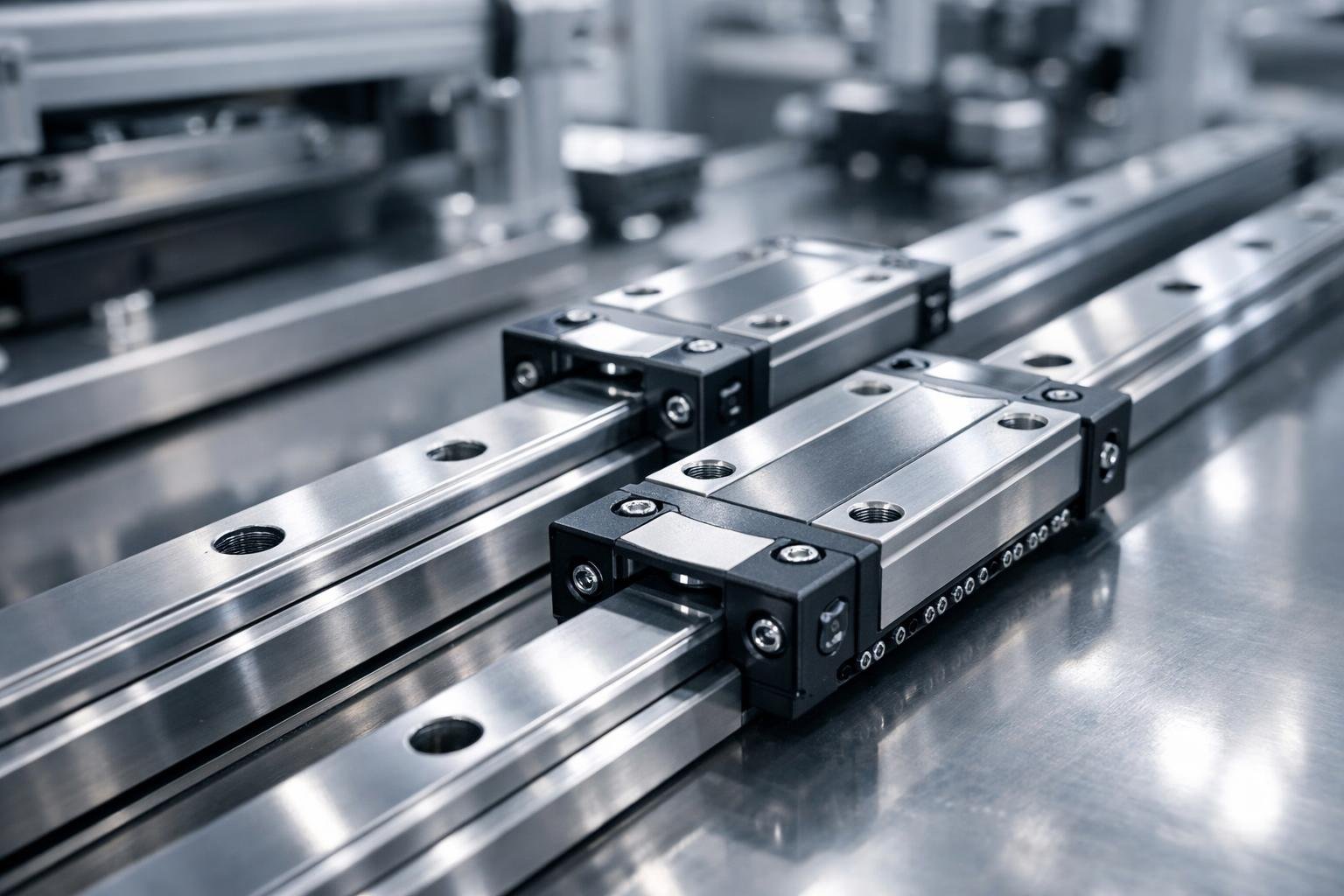
Linear guides work together with rails and carriages to create complete motion systems.
These systems are the backbone of automated equipment in manufacturing and industrial settings.
Role of Linear Rails and Guides
Linear rails provide the precision-engineered surface that supports and directs movement in a linear guide system.
The rail attaches to your machine’s base and acts as the track for the carriage.
Most linear rails have precisely ground grooves or raceways so rolling elements can move with almost no friction.
Your choice between square and round rail profiles comes down to what your application demands.
Square rails give you more load capacity and resist twisting, so they’re great for heavy machinery and CNC setups.
Round rails are less expensive and do the job for lighter loads or when you just want something simple.
The rail’s straightness and surface finish really matter for accuracy.
Manufacturing tolerances go from micrometre-level for most industrial jobs to sub-micrometre for things like semiconductor equipment.
The rails are usually made from hardened steel, which holds up well against wear and keeps its shape over time.
Carriages and Motion System Integration
The carriage mounts to your moving component and houses the rolling elements that travel along the rail.
Ball bearings or rollers inside the carriage recirculate as the carriage moves, giving you smooth, consistent motion along the rail.
Linear guide systems combine the rail, carriage, and drive mechanism into a functional motion system.
You can integrate these with ball screws, belt drives, or even linear motors, depending on what you’re after.
The carriage usually has mounting holes so you can bolt your load right on, keeping everything aligned with the rail.
Proper integration means matching the carriage’s load rating and preload to your needs.
Higher preload cuts clearance and boosts rigidity, but you’ll get more friction too.
What you pick here impacts accuracy, vibration resistance, and how long your linear motion system actually lasts.
Key Performance Factors
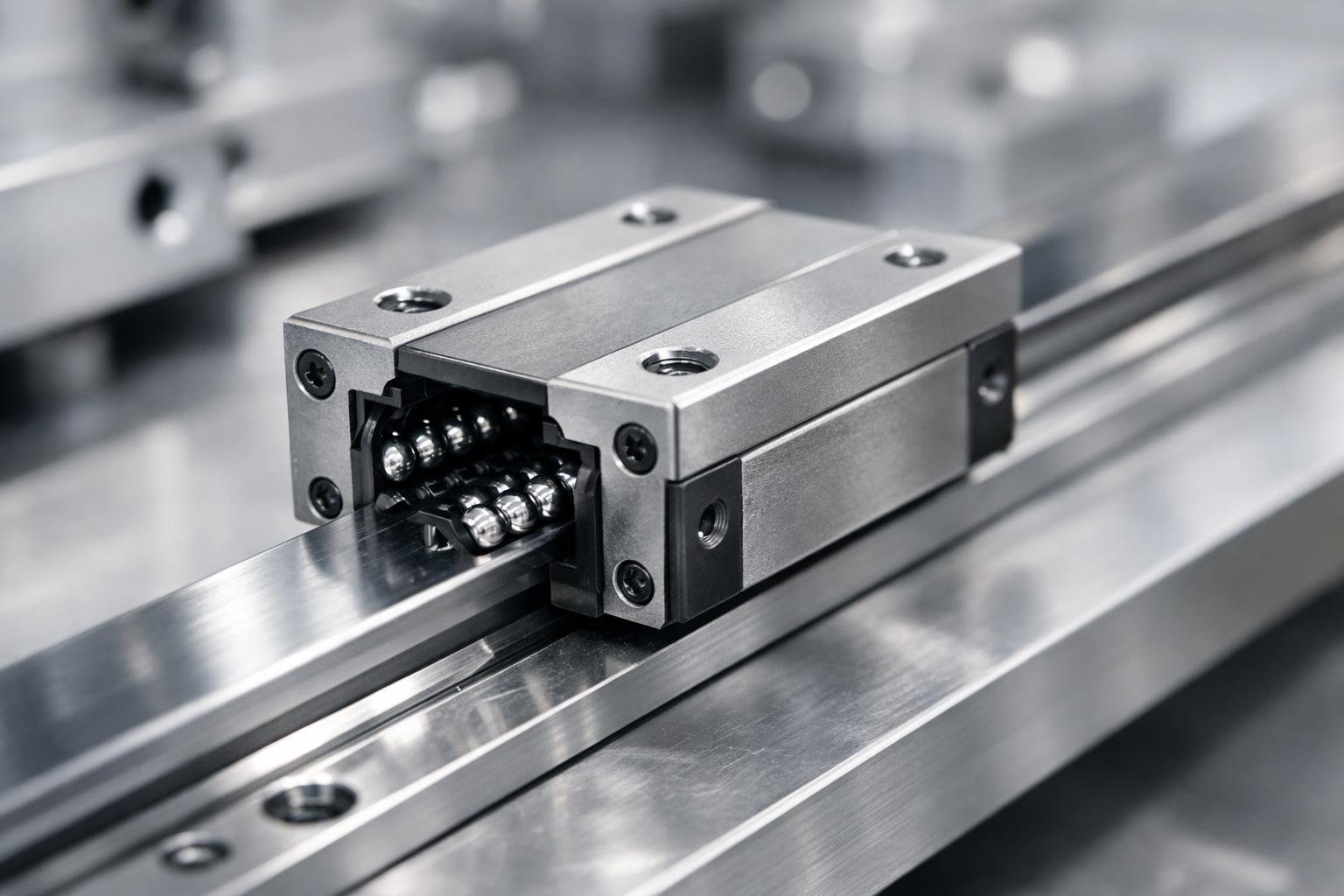
Load capacity and precision are the big ones when it comes to linear bearing performance.
They’ll decide if the bearing meets your needs and how long it’ll keep running smoothly.
Load Capacity
Load capacity is the maximum weight and force your bearing can handle before performance drops or it fails.
This covers radial loads (sideways), axial loads (along the rail), and moment loads (twisting forces).
Good linear bearings list dynamic load ratings for moving use and static ratings for when things aren’t moving.
The size and material of the bearing parts make a difference.
Bigger balls or rollers spread out the forces, and hardened steel tracks don’t deform as easily under heavy loads.
Bearings with more contact points can usually take higher loads than plain bearings of the same size.
Don’t forget about shock loads or vibrations—they matter just as much as steady forces.
Pushing a bearing past its rated load speeds up wear and can ruin accuracy faster than you’d expect.
Manufacturers usually have load tables to help you match specs to what you actually need.
Achieving High Precision
High precision means holding tight tolerances for straightness, parallelism, and positioning accuracy.
You get there with careful manufacturing tolerances, proper preload, and keeping deflection under load to a minimum.
Quality bearings use ground and polished raceways, matched rolling elements, and controlled clearances to keep things accurate.
Preload helps by reducing play, making the system stiffer and more repeatable.
But crank up the preload too much and you’ll get more friction and faster wear—too little and you’ll get unwanted slop.
Temperature swings can cause expansion, and dust or debris can mess with smooth motion.
Sealing and lubrication go a long way toward keeping things consistent.
If you need serious accuracy, like for CNC machines or medical equipment, you’ll want higher accuracy grades and tighter tolerances.
Lubrication and Maintenance Practices
Lubrication keeps bearings running longer, and good sealing keeps out the junk that causes problems.
Lubrication Methods
Linear bearings need steady lubrication to cut friction between the rolling elements and raceways.
Your main choices are grease and oil, and which you pick depends on your setup.
Grease lubrication is great for heavy loads and slow speeds.
It sticks around longer and helps seal things up.
Just pump it in until you see fresh grease coming out of the seals.
Oil lubrication is better for high-speed setups where heat is a concern.
You can drip it in, use a pump, or set up an automated system for continuous flow.
Most new open bearings come with a preservative coating.
If you’re using a mineral oil-based lubricant, you usually don’t need to clean it off first.
Self-lubricating bearings slowly release lubricant as they run, which is handy for places you can’t reach easily or systems that run all the time.
Stick to the manufacturer’s schedule for relubrication—sometimes it’s every 100 kilometres, sometimes once a year, depending on your conditions.
Don’t go overboard though; too much lubricant just attracts dirt and slows things down.
Seals and Contamination Protection
Seals keep dirt and moisture out and hold the lubricant in.
Most linear bearings use rubber or synthetic seals for this job.
Contact seals are tight but add a touch of friction.
Non-contact shields don’t protect as well but let things move more freely.
Go for sealed bearings if you’re working in dusty or dirty places—think woodworking or outdoor gear.
It’s a good idea to check seals now and then for cracks or if they’re getting hard or slipping out of place.
Bad seals let in dirt, which can scratch up the raceways and kill the bearing early.
Clean the rails and housings when you do maintenance so you’re not just putting the dirt right back in.
For really nasty environments, bellows or wipers add another layer of protection before stuff even gets to the main seals.
Selecting the Right Linear Bearing
Picking the right linear bearing means thinking about your specific needs and how the environment will affect performance and life.
Application Requirements
Start by figuring out the load your bearing has to handle—radial, axial, and moment loads all count.
If you guess low, you’ll probably end up replacing bearings sooner than you’d like.
Speed and precision matter too.
Ball bearings are great for high speeds and moderate loads; roller bearings are better for heavy loads at lower speeds.
If you need positioning accuracy down to micrometres, you’ll want tight tolerances and the right preload.
Consider how far you need things to move—longer strokes might need more bearing blocks or carriages to keep things stable.
Mounting space matters, too, so check if you’ve got room for standard or flange-mounted bearings.
Maintenance access is another thing to keep in mind.
Self-lubricating bearings are a lifesaver in hard-to-reach spots.
If your system runs non-stop, look for bearings with easy-to-reach lubrication points and sealed designs to stretch out service intervals.
Materials and Environmental Considerations
Temperature swings can really affect bearing performance.
Standard steel bearings are good from -20°C to 80°C, but hotter setups need special materials or ceramics.
If you’re dealing with moisture, chemicals, or lots of dirt, go for corrosion-resistant materials.
Stainless steel works well for food and medical gear.
Polymer or coated bearings are worth a look for harsh chemical environments.
Dust and debris chew up open bearings fast.
Sealed or shielded bearings are better for dirty jobs, and heavy contamination may call for scrapers or bellows.
Your lubrication plan should fit your environment.
Grease is fine for most uses, but oil works better for high speeds.
Self-lubricating materials mean less maintenance, though they usually handle lighter loads.
Applications of Linear Bearings
Linear bearings are behind the scenes in all kinds of machines, from factory automation to medical lab gear.
They make precise moves possible, whether it’s a robot arm or a CNC table.
Automation and Robotics
Modern automation relies on linear bearings for just about everything.
Robotic arms use them to move end effectors exactly where they need to go, over and over.
Pick-and-place machines use linear guides to zip products between stations and keep them lined up.
Assembly lines build them into transfer mechanisms and positioning stops.
They handle constant starts and stops and changing payloads—tough work for any component.
You’ll spot them in welding robots, packaging machines, and material handlers.
Even semiconductor manufacturing depends on linear bearings for wafer handling and inspections.
Those setups need sub-micron accuracy, so sealed linear guides are a must to keep out particles and keep precision high.
CNC Machines and 3D Printers
CNC mills, lathes, and routers all use linear bearings on their axes to hit tight tolerances.
The bearings keep movement smooth and backlash-free, which is what you need for precise machining.
3D printers use miniature linear bearings for the print head and platform.
Even the little desktop models have ball bushings or profile rails on round or square shafts.
Low friction here means fewer missed steps or layer shifts—pretty important if you want a clean print.
Plasma cutters, laser engravers, and waterjets also rely on linear bearings for tracing fast, complex paths without deflection.
Medical and Laboratory Equipment
Medical imaging machines like CT scanners and MRIs use linear bearings to move patient tables and imaging parts.
Quiet, smooth movement is key for patient comfort and image quality.
Linear guides help move heavy gantries with millimetre precision for accurate scans.
Surgical robots pack miniature linear bearings into their arms and tool systems.
They need to work reliably in sterile conditions and deliver the accuracy surgeons count on.
Lab automation uses linear bearings in pipette handlers, plate readers, and sample analysers.
Sealed bearings here keep out chemicals and help the gear last longer in tough lab settings.
Innovations and Trends in Linear Bearings
Linear bearing tech is moving forward—new materials, longer life, higher loads, and now smart sensors that keep tabs on performance.
Advancements in Materials
Manufacturers are rolling out advanced materials that last longer and perform better.
High-grade stainless steel and ceramics are more common now, and they’re much better at resisting corrosion than the old stuff.
That’s a big win for bearings running in rough environments.
Composite materials are showing up more, too.
They cut weight without losing strength—pretty handy for robotics and aerospace.
Some brands are using carbon fibre reinforced plastics, which can trim bearing weight by up to 40% compared to steel.
Surface coatings have gotten a lot better, too.
These new coatings lower friction and wear, so you can go a lot longer between maintenance stops.
Some ball chain bearings with advanced coatings can run for 5,000 kilometres before needing lubrication—compare that to 100 kilometres for the old versions.
Smart and Sensor-Enabled Bearings
Now we’re seeing linear bearings with built-in sensors that track how things are running in real time.
They’ll measure temperature, vibration, and load as you go.
You can keep an eye on this data and catch problems before they turn into breakdowns.
Smart bearings connect to industrial networks and automation systems, sending alerts if conditions change or wear gets out of hand.
This helps you dodge surprise failures and keep downtime low.
The sensors let you tweak speeds, loads, and maintenance schedules based on what’s really happening—not just guesses.
That’s especially useful in CNC and automated lines where precision and reliability are everything.
Summary and Future Outlook
Linear bearings make precise, low-friction movement along a straight path possible. They’re essential in modern manufacturing, automation, and robotics.
These devices cut down on friction, support loads, and keep motion on track with impressive precision. The technology itself comes in a few different flavours.
Rolling element bearings use balls or rollers for high-speed jobs. Sliding contact bearings are better for heavy loads and can handle shocks well.
Profiled rail guides? They’re the go-to for tasks where you really can’t compromise on accuracy.
Key Market Indicators
The linear bearings market is on a solid upswing. Back in 2024, it was valued at around £1.4 billion.
Projections suggest it could hit £24 billion by 2032-2033. Annual growth rates are floating between 6% and 6.3%—not too shabby.
Growth Drivers
What’s pushing this growth? Automation is spreading everywhere.
Robotics keeps popping up in new spots, especially in manufacturing and logistics. Industry 4.0 is also nudging up demand for precision parts.
Technology Advancement
Looking ahead, smart tech and integration are the main focus. Manufacturers are adding sensors and monitoring systems.
Materials science is stepping up, boosting load capacity and lifespan. Environmental resistance is improving too, thanks to advanced coatings and new materials.
Application Expansion
Linear bearings are finding their way into all sorts of fields. Precision machine tools depend on them for accuracy.
Medical devices need their smooth operation. 3D printers count on them for precise positioning, while industrial robots rely on them for reliable movement.
Frequently Asked Questions
People have plenty of questions about linear bearings—their uses, how they work, how long they last, and what makes them different. Here are some answers to those practical concerns.
What applications are linear bearings typically employed in?
You’ll spot linear bearings in manufacturing gear where precise straight-line motion matters. CNC machines use them to position cutting tools with accuracy measured in micrometres.
3D printers need linear bearings to move print heads smoothly along all three axes. Industrial automation systems use these components all over the place.
Packaging machines use them to guide conveyors and pick-and-place arms. Robotic arms depend on linear bearings for extension and retraction, especially when repeating the same motion over and over.
Transportation systems are another big area. Warehouse logistics equipment uses linear bearings in sorting conveyors and storage systems.
Medical devices like CT scanners and surgical robots count on them for smooth, controlled movement. Even office machines—think photocopiers and printers—have tiny linear bearings guiding paper feeds.
How do linear bearings function?
Linear bearings cut friction by turning sliding into rolling motion. In ball bushing designs, hardened steel balls roll between the shaft and the bearing housing.
These balls circulate in a loop, supporting weight as they pass through the load zone, then looping back around. Profiled rail systems work a bit differently but use a similar idea—rolling elements travel between a carriage and a precision-ground rail.
The contact points between balls or rollers and the raceways help spread out the load and keep friction low. Plain linear bearings are another story.
They use low-friction stuff like polymers or bronze sliding right against the shaft. Sure, there’s more friction than with rolling designs, but they’re simple and good for slower, heavier jobs or when you expect some shocks.
Lubrication is huge for all types. A thin layer of oil or grease keeps surfaces apart, cuts friction, carries away heat, and stops corrosion in its tracks.
What is the lifespan of a linear bearing under normal usage conditions?
Linear bearing lifespan can swing a lot depending on load, speed, and the environment. Manufacturers usually state life in kilometres of travel or hours of use.
A ball bushing in moderate duty might last anywhere from 20,000 to 50,000 kilometres before you need to swap it out. Heavy loads? Those will shorten its life fast.
Pushing past the rated load wears out the raceways and rolling bits quicker. High speeds mean more heat and more frequent lubrication.
Environmental stuff matters too. Dust or particles can rough up precision surfaces, moisture brings corrosion, and temperature extremes mess with lubricants and materials.
Keep things clean and climate-controlled, and your bearing will last way longer. Maintenance is a game-changer.
Regular lubrication stops metal-on-metal contact and flushes out gunk. Install bearings right and you’ll get good load distribution.
If you mess up alignment, a bearing might fail in months. Get it right and keep up with maintenance, and it could run for years.
Could you explain the 2-1 rule in the context of linear bearings?
The 2-1 rule is a handy tip for supporting linear shafts with multiple bearings. Basically, when you use more than one bearing on a shaft, you space them at a 2-to-1 ratio from the ends.
This setup helps spread out the load and cuts down on shaft bending. For example, with a 900mm shaft and two bearings, you’d put them about 300mm from each end instead of right at the ends.
That way, the shaft stays straighter under load, and the bearings don’t fight each other if things aren’t perfectly lined up. The rule gets more important as shafts get longer.
Long spans can bend more, which can bind the bearing or wear it unevenly. Supporting at those 2-1 spots keeps things in check.
Sometimes you have to break the rule. Heavy loads at one end or thermal expansion might mean different spacing works better. Think of the 2-1 rule as a starting point, not a law.
What distinctive characteristics do linear bearings possess compared to other bearings?
Linear bearings only let things move in a straight line, while rotational bearings allow spinning around an axis. That basic difference shapes their whole design.
Ball bearings in motors or wheels? They spin around a central point. Linear bearings guide parts along rails or shafts—one direction, no circles.
Construction shows the difference. Rotational bearings use two rings with balls or rollers in between.
Linear bearings have a carriage that travels along a shaft or rail, with recirculating paths for the balls or rollers so they can keep going as far as you need. Load handling is another big difference.
Radial ball bearings mainly handle loads at right angles to the shaft. Thrust bearings take loads along the shaft’s length.
Linear bearings juggle both radial and moment loads, all while keeping things accurate along the travel path. You see them in different places, too.
Rotational bearings are for wheels, motors, gearboxes. Linear bearings are behind the precision movement in machine tools, printers, and automation equipment.
Trying to swap one for the other? That just doesn’t work—you’d have to redesign the machine entirely.
How does one determine the price range for linear bearings?
Linear bearing prices are all over the place. The type, size, and how precise you need them to be—those all matter.
Basic ball bushings, meant for lighter jobs, might go for £5 to £20 each. If you’re looking at industrial-grade profiled rail systems, expect something more like £100 to £500 per metre, rail and carriage included.
Size? Yeah, that’s a big one. A 12mm ball bushing is way cheaper than a 50mm version, no surprise there.
Longer rails? More material, more grinding, more money—pretty straightforward.
Precision grade is where things really jump. If you just need standard tolerances for general stuff, you’ll pay less.
But if you’re outfitting CNC machines or measurement gear and need those tight tolerances, the price can easily double or even quintuple. All that extra grinding and checking adds up fast.
Material choice doesn’t get enough attention, honestly. Stainless steel bearings cost more than regular steel, and ceramics? Those are the priciest, thanks to their fancy properties and the headache of making them.
If you need special coatings for corrosion or extreme temperatures, that nudges the price up too.
Buying just one or two bearings at a time? Prepare to pay more per piece. But if you’re ordering in bulk, you can snag a discount—sometimes a big one.
Manufacturers buying thousands always get the best deals. It’s worth thinking about the total system cost, not just the bearings, but the rails and hardware too.