The Complete Guide to Choosing the Right Bearing
Whether you’re maintaining industrial machinery, building a custom project, or replacing a worn-out component, choosing the right bearing is critical to performance and longevity. The wrong bearing leads to premature failure, increased friction, and costly downtime.
In this guide, we’ll walk you through every bearing type, when to use each one, and how to select the perfect bearing for your specific application.
What Is a Bearing and Why Does It Matter?
A bearing is a machine element that constrains relative motion and reduces friction between moving parts. Bearings support shafts, enable rotation, and carry loads — making them one of the most essential components in any mechanical system.
Choosing the correct bearing affects energy efficiency, noise levels, maintenance intervals, and the overall lifespan of your equipment.
Types of Bearings: A Complete Breakdown
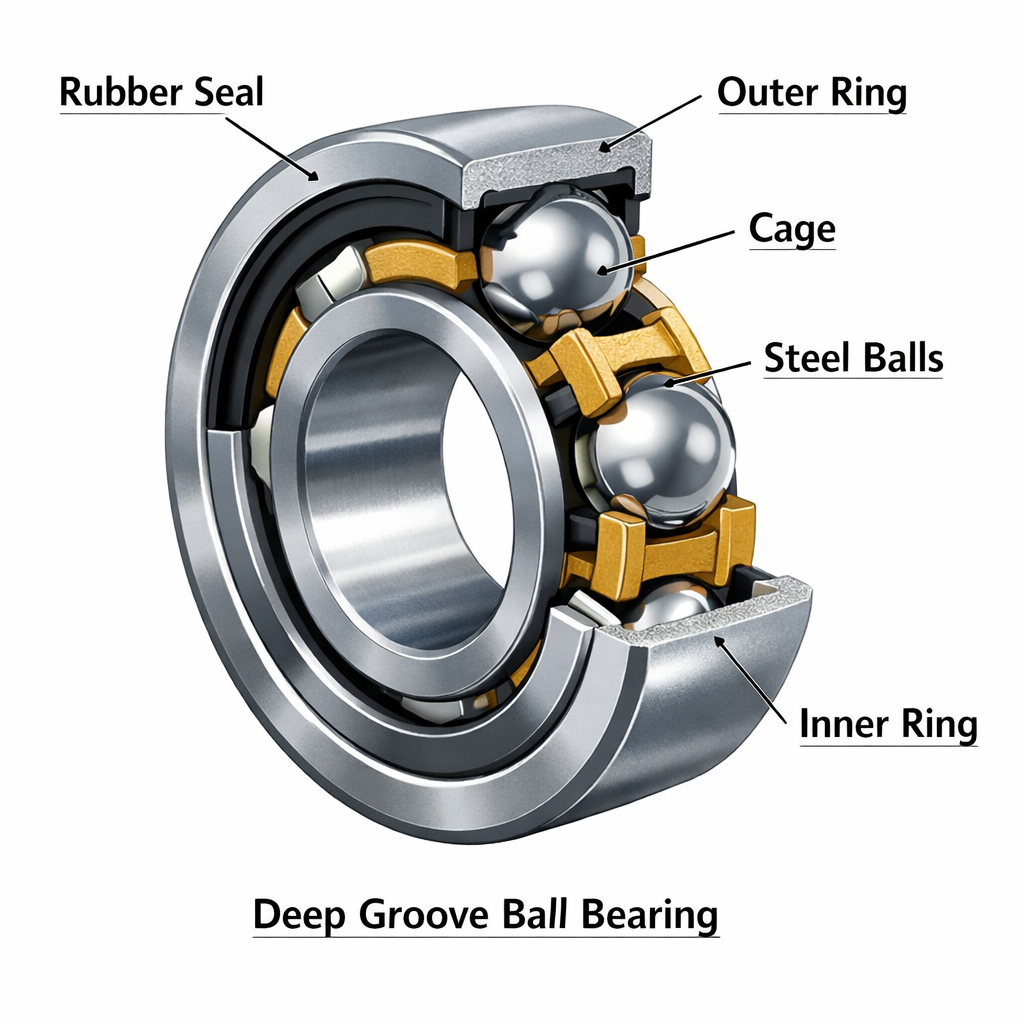
1. Deep Groove Ball Bearings
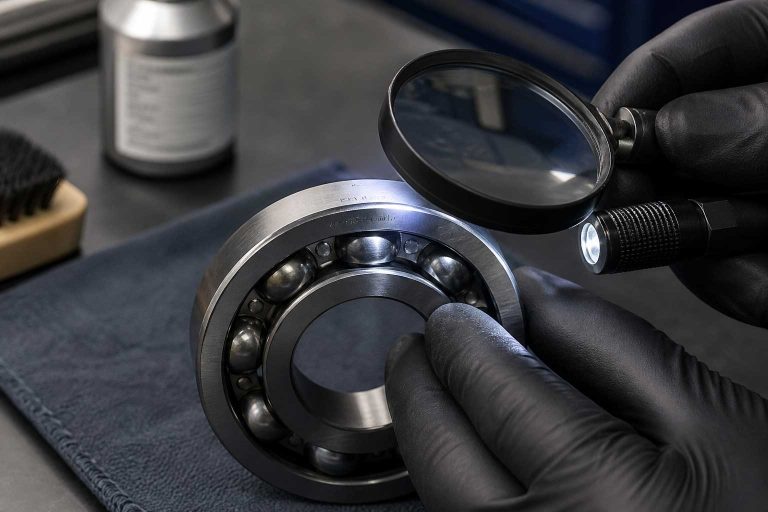
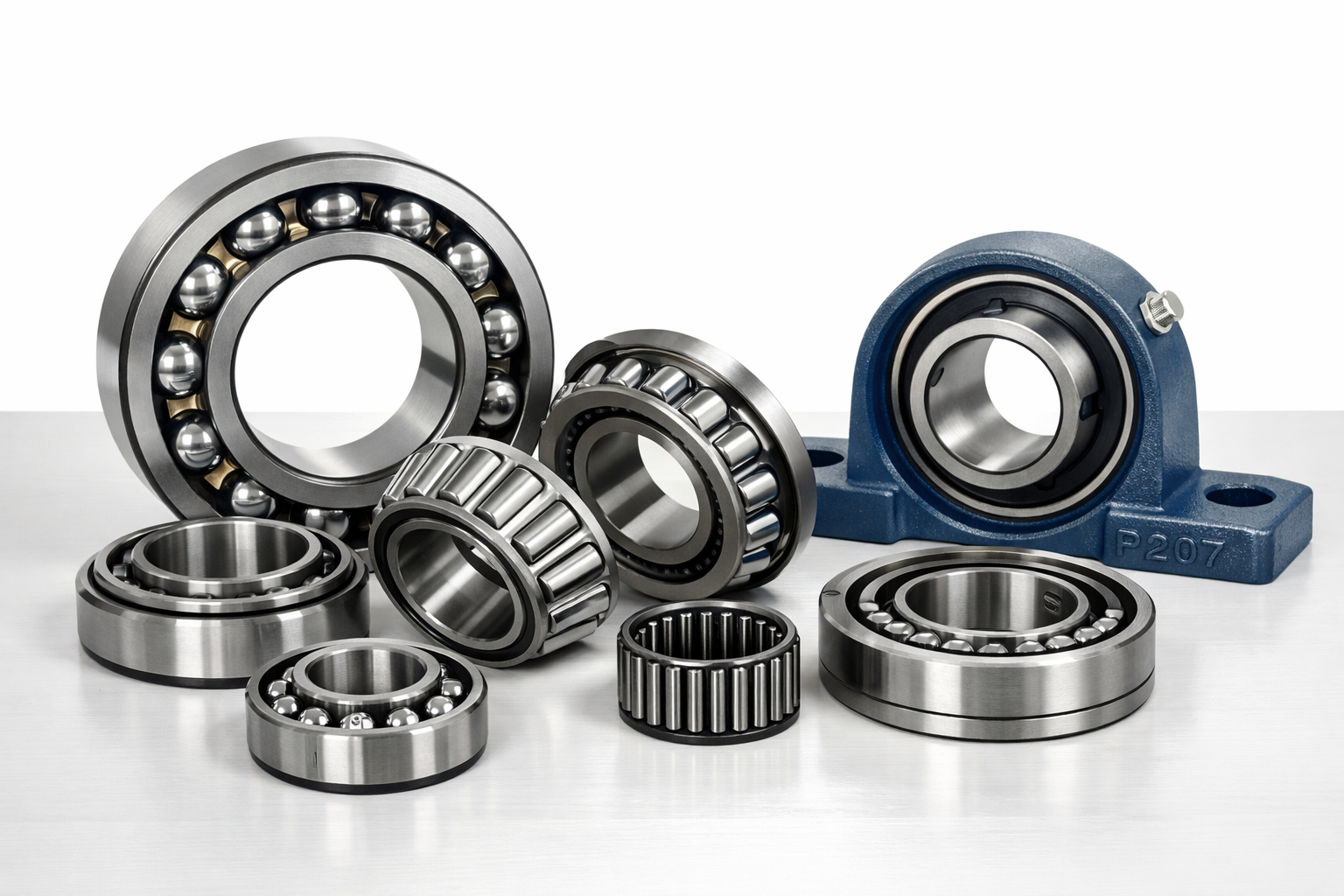
The most versatile and widely used bearing type. Deep groove ball bearings handle moderate radial and axial loads, operate at high speeds, and require minimal maintenance. Common applications include electric motors, pumps, gearboxes, and household appliances.
2. Angular Contact Ball Bearings
Designed for combined radial and axial loads in one direction. These bearings are commonly used in pairs for machine tool spindles, pumps, and automotive wheel hubs where precise axial positioning is required.
3. Self-Aligning Ball Bearings
Feature a spherical outer ring raceway that allows for shaft misalignment and deflection. Ideal for applications where shaft deflection or mounting errors are unavoidable, such as conveyors, textile machinery, and agricultural equipment.
4. Cylindrical Roller Bearings
Use cylindrical rollers for high radial load capacity at high speeds. Found in heavy-duty gearboxes, rolling mills, and electric motors where radial loads are dominant.
5. Tapered Roller Bearings
Handle heavy combined radial and axial loads. The industry standard for automotive wheel bearings, steering mechanisms, and heavy gearboxes.
6. Pillow Block (Housed) Bearings
Pre-mounted in a housing unit for easy installation. Perfect for conveyor systems, agricultural machinery, and any application requiring a simple bolt-on bearing solution.
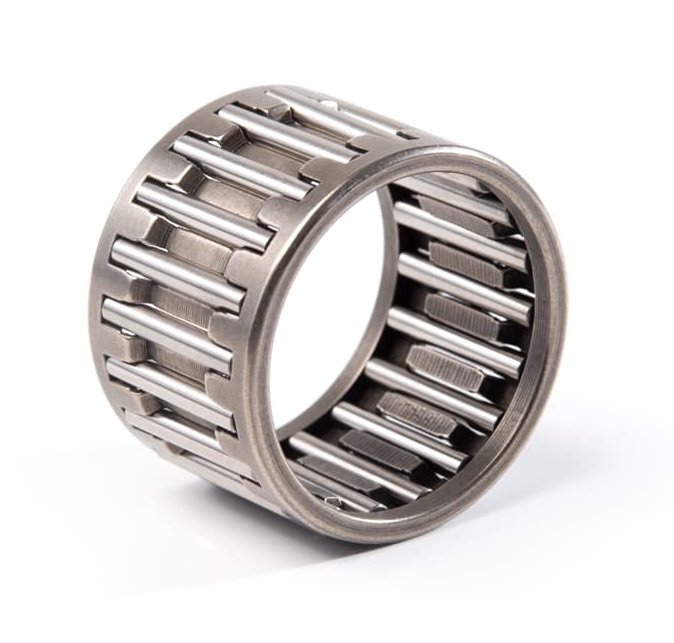
7. Needle Roller Bearings
Compact bearings with a thin cross-section and high load capacity relative to their size. Used in automotive transmissions, compressors, and anywhere space is limited.
Bearing Selection: Key Factors to Consider
| Factor | What to Consider | Impact on Choice |
|---|---|---|
| Load Type | Radial, axial, or combined? | Determines bearing geometry |
| Load Magnitude | Light, moderate, or heavy? | Ball vs roller bearing |
| Speed | RPM of the shaft | Higher speed = ball bearings preferred |
| Misalignment | Is shaft deflection expected? | Self-aligning types needed |
| Environment | Temperature, moisture, contamination | Sealing and material choice |
| Space | Available radial/axial space | Needle bearings for tight fits |
| Maintenance | Accessible or sealed-for-life? | Sealed (2RS) vs open bearings |
Pro Tip: When in doubt, start with a deep groove ball bearing (e.g., 6200 series). They cover the widest range of general-purpose applications and are cost-effective. Only move to specialist types when load, speed, or alignment demands require it.
How to Read a Bearing Number
Bearing designations follow ISO standards. Understanding them helps you find exact replacements quickly:
- 6205-2RS — Deep groove (6), medium series (2), 25mm bore (05), rubber sealed both sides (2RS)
- 6305-ZZ — Deep groove (6), heavy series (3), 25mm bore (05), metal shielded both sides (ZZ)
- UC205 — Insert bearing, 25mm bore, for housed units
- 30205 — Tapered roller bearing, 25mm bore
Sealed vs Open Bearings: Which Do You Need?
Sealed bearings (2RS or 2RSR) come pre-greased and protect against contamination. They’re ideal for environments with dust, moisture, or debris — and they’re maintenance-free.
Open bearings allow for custom lubrication and run cooler at high speeds. Choose these when you have a controlled environment and need maximum speed performance.
Shielded bearings (ZZ) offer a middle ground — they keep out large particles while allowing slightly better heat dissipation than rubber seals.
Common Bearing Failures and How to Prevent Them
- Contamination — Use sealed bearings or improve housing seals
- Improper lubrication — Follow manufacturer grease intervals; don’t over-grease
- Misalignment — Check shaft and housing alignment or use self-aligning types
- Overloading — Upsize the bearing or switch from ball to roller type
- Incorrect fitting — Always use proper press-fit tools; never hammer directly
Did you know? Up to 50% of bearing failures are caused by contamination and poor lubrication. Simply choosing a sealed bearing and using quality lubricants can dramatically extend bearing life.
Choosing the Right Bearing Brand
Quality matters. At Bearing Superstore, we stock bearings from industry-leading manufacturers:
- FAG — Premium German engineering, trusted in automotive and industrial sectors
- INA — Specialists in needle roller bearings and linear motion
- LDK — Excellent value housed bearing units and insert bearings
- AMC — Reliable general-purpose bearings at competitive prices
Need Help Choosing the Right Bearing?
Our team of bearing specialists are here to help. Browse our full range or get in touch for expert advice.Shop Bearings Now
Frequently Asked Questions
What is the most common type of bearing?
Deep groove ball bearings are the most widely used bearing type. They handle both radial and axial loads, run at high speeds, and require minimal maintenance — making them suitable for the majority of applications.
How do I know what size bearing I need?
Measure the shaft diameter (bore size), the outer diameter of the housing, and the width. Bearings follow ISO standards — for example, a 6205 bearing has a 25mm bore, 52mm outer diameter, and 15mm width. You can also check the old bearing for its printed designation number.
What is the difference between ball bearings and roller bearings?
Ball bearings use spherical balls as rolling elements and are ideal for high-speed, lower-load applications. Roller bearings use cylindrical or tapered rollers, providing greater contact area and handling heavier radial loads — but typically at lower speeds.
How often should I replace my bearings?
Bearing life depends on load, speed, lubrication, and environment. Signs of replacement include unusual noise (grinding or humming), vibration, excessive heat, or visible play/looseness in the shaft. Regular inspection during scheduled maintenance is recommended.
Where can I buy quality bearings online in the UK?
Bearing Superstore offers a comprehensive range of bearings, bushes, seals, and power transmission products from trusted brands like FAG, INA, and LDK — all at competitive wholesale prices with fast UK delivery.
Summary
Selecting the right bearing comes down to understanding your load, speed, environment, and space constraints. Start with the versatile deep groove ball bearing for general applications, and upgrade to specialist types (tapered roller, self-aligning, needle) when conditions demand it. Always choose quality brands, ensure correct fitting, and maintain proper lubrication to maximise bearing life.
Ready to find your perfect bearing? Browse our full catalogue at Bearing Superstore — quality bearings at wholesale prices, delivered across the UK.